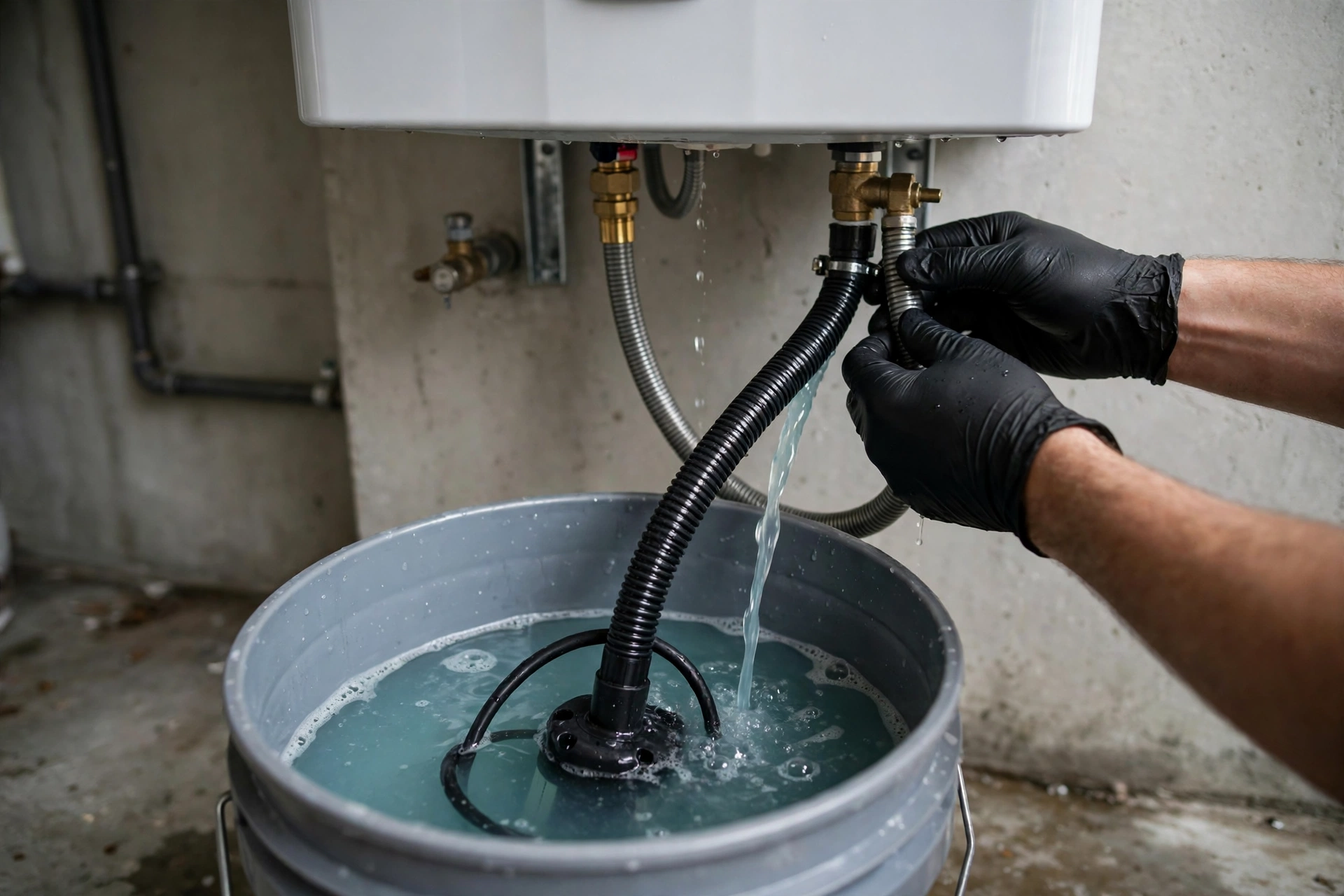
Tankless Water Heater Descaling in the Permian Basin
Descaling a tankless water heater means circulating a mild acid solution through the heat exchanger to dissolv…
Learn moreA cold shower is a bad way to start the day, and it is worse when you do not know whether the fix is a flipped breaker or a dead water heater. Before you call for help, a few minutes of checking can identify the simple causes and save you a service fee.
This guide walks through the checks in order, from the easiest to the ones that need a technician. It covers both gas and electric units since Midland homes have plenty of each. If the checks point to a real failure, our water heater repair team can take it from there.
For electric heaters, look at the breaker panel. A tripped breaker feeding the water heater is one of the most common causes of sudden no-hot-water calls, and resetting it takes seconds. If it trips again right away, leave it off and call a technician, since something is shorting.
For gas heaters, check that the gas valve on the unit is on and look through the sight glass for the pilot or burner. If the pilot is out, follow the relighting instructions printed on the unit. A pilot that will not stay lit usually means a bad thermocouple, which is a quick professional repair.
Electric units also have a high-limit reset button, usually a red button behind the upper access panel. It trips when the tank overheats, and pressing it can restore hot water in seconds. If it trips again soon after, do not keep resetting it, since repeated trips mean a failing thermostat or element that needs professional attention.

Someone may have bumped the thermostat, or a failing thermostat may have drifted. Electric units have two thermostats behind access panels, and if the upper one fails the whole tank can go cold. The setting should be 120 degrees for safety and efficiency.
If the water is lukewarm rather than cold, a thermostat issue or a single failed element is more likely than a total failure. Lukewarm water that runs out fast points to the lower element being dead while the upper one still works.
You can sanity-check the thermostat with a simple test. Run the hot tap for a minute, fill a glass, and measure with a kitchen thermometer. If the reading is far below the thermostat setting, the thermostat is not doing its job. If it matches but runs out fast, the problem is capacity or a dead element rather than the setting.
Midland's hard water is brutal on electric heating elements. Sediment buries the lower element, which then overheats and burns out. When it fails, the tank loses half its heating power and hot water runs out fast or never fully reheats.
Replacing an element is a routine repair, not a reason to replace the heater. A technician drains the tank below the element level, swaps it, and refills. If elements keep failing every year or two, the real problem is sediment, and our sediment flush guide shows the fix.
An upper element failure looks different: little or no hot water at all, since the upper element heats first and the lower one never gets its turn. When both elements test fine but recovery is slow, heavy sediment is usually the culprit, insulating the tank and stealing heat. That pattern is common in Midland tanks that have missed a few flush cycles.
On gas units, a burner that will not light can mean a failed igniter, a clogged burner, or a venting problem tripping the safety shutoff. Soot around the burner or a yellow, lazy flame instead of a crisp blue one signals incomplete combustion that needs attention.
Never ignore gas smells. If you smell gas near the heater, do not relight anything, leave the area, and call the gas utility or emergency services from outside. Combustion issues are strictly professional territory.
A thermocouple that keeps failing may be a symptom rather than the root cause. A dirty pilot orifice, a downdraft in the flue, or a failing gas valve can all kill pilots repeatedly. If you have relit the pilot more than twice in a season, have a technician find the underlying reason instead of treating the symptom.
If the tank is over 10 years old and the checks point to internal failure, replacement is usually smarter than repair. A tank that has lost heating ability alongside rust-colored water or visible corrosion is telling you its service life is over.
Our signs you need a replacement guide lists the full set of end-of-life symptoms so you can make the call with confidence rather than guess.
When replacement is the answer, size the new unit to your actual household rather than copying the old one. Families grow, kids become teenagers with long showers, and the 40-gallon tank that served a couple may not serve a family of five. Our water heater installation page covers how proper sizing avoids the next round of cold showers.
 Want Water Heater Guidance for Your Home?
Read the guide, then describe your water heater problem and we will help arrange the next step.
The usual suspects are a tripped breaker, an extinguished pilot light, a failed heating element, or a bad thermostat. Check power and gas first before assuming the worst.
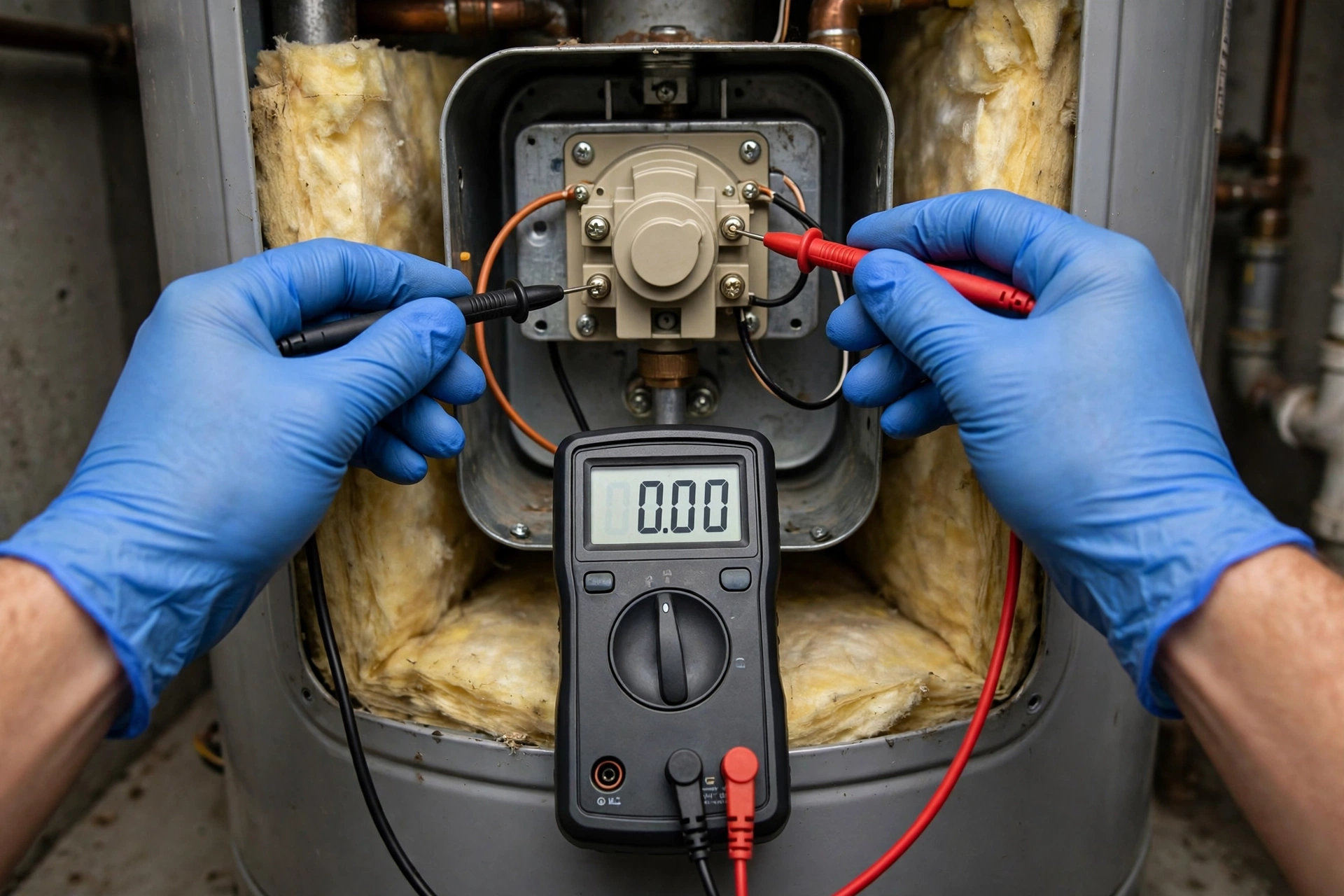
Lukewarm water that runs out quickly is the classic sign on electric units. A technician can test each element with a multimeter in minutes.
Yes. Heavy sediment insulates the tank floor on gas units and buries elements on electric units, both of which cripple heating. Annual flushing prevents it.
Repair if the tank is under 8 to 10 years old and the tank body is sound. Replace if it is older, leaking, or rusting from the inside.
Descaling a tankless water heater means circulating a mild acid solution through the heat exchanger to dissolv…
Learn more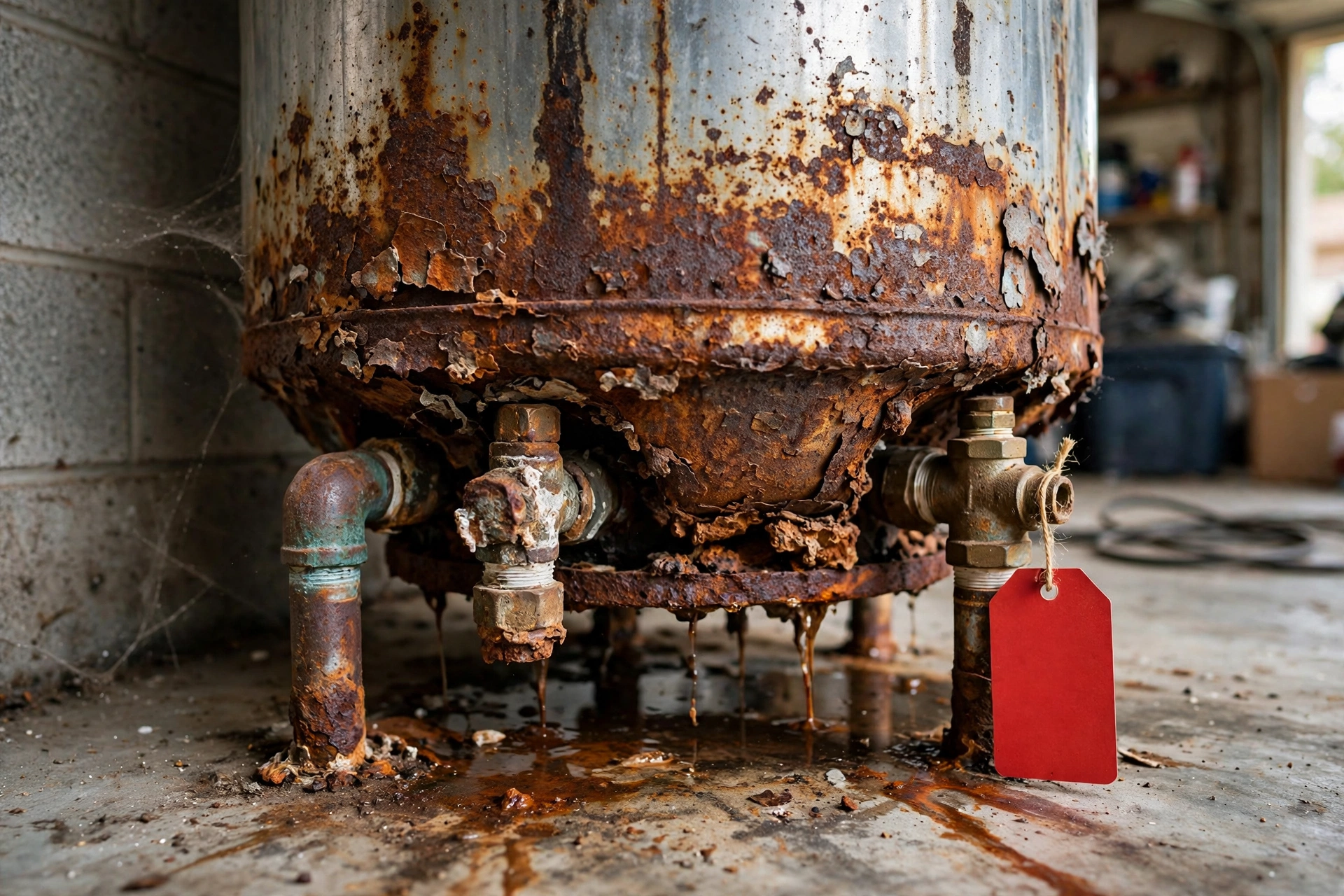
The clearest signs you need a new water heater are age over 10 years, rust-colored hot water, rumbling sedimen…
Learn more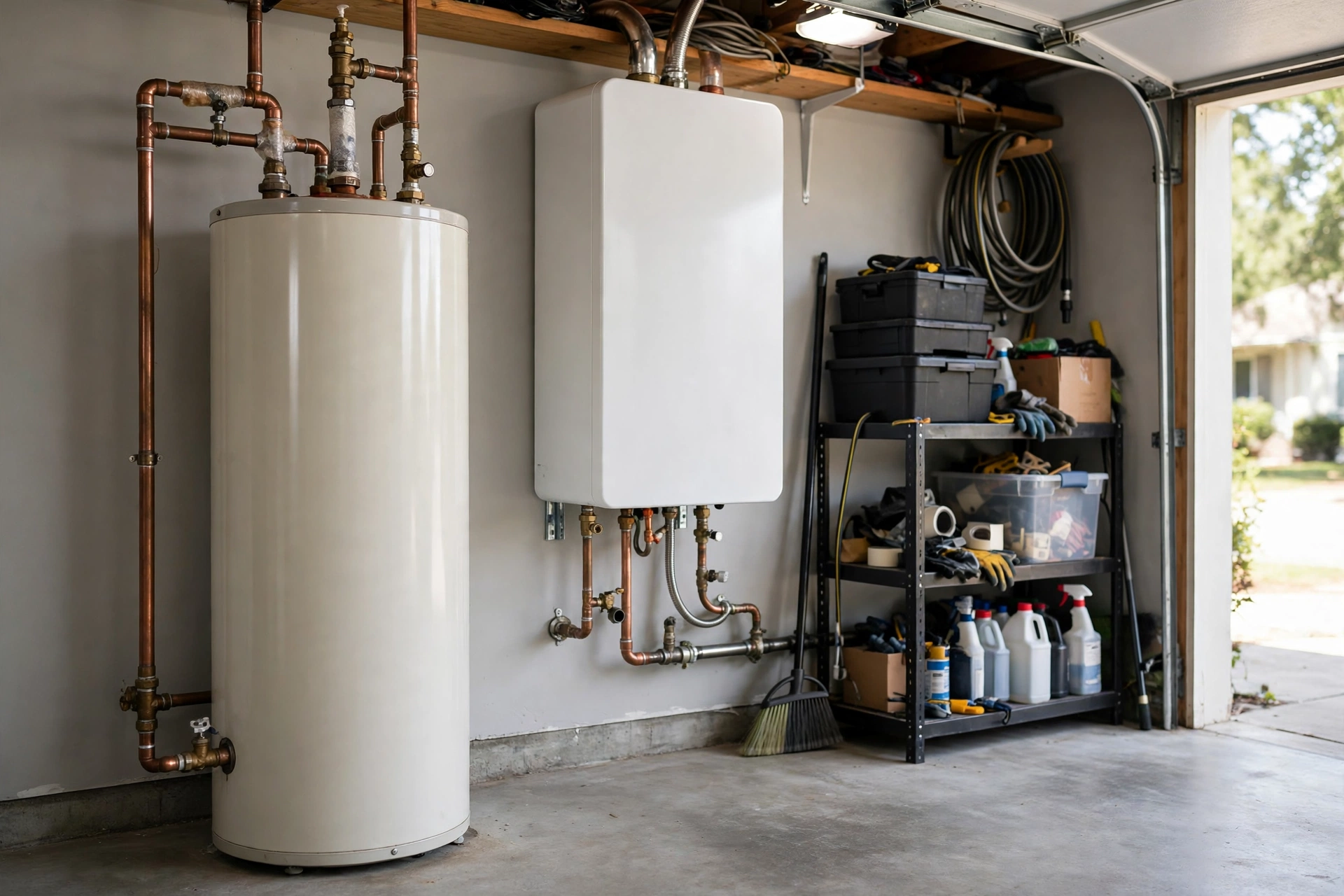
Tank water heaters cost less up front and handle Midland hard water with simple yearly flushing. Tankless unit…
Learn moreHot Water, HandledThe most common reasons for no hot water are a tripped breaker, a failed heating element, a worn-out thermocouple on gas units, or a tank buried in sediment. Start with the simple checks: power, gas, pilot light, and thermostat setting. If those look fine, the problem is usually inside the tank, and our water heater repair page explains how a technician diagnoses it.