Water Heater Troubleshooting
Midland Water Heater Pros connects you with independent contractors who repair gas and electric water heaters …
Learn moreInstalling a water heater sounds simple until you stand in the aisle trying to choose one. Tank or tankless, gas or electric, 40 gallons or 50, and a wall of specification sheets that all blur together. The truth is that most installation mistakes are not about brands. They are about size: a unit too small for the household's morning routine, or a unit shoehorned into a 1950s hall closet with no room for safe venting or future service.
Midland adds its own variables. Oilfield families often run large households on staggered shift schedules, which means hot water demand spikes at odd hours and stays high. The water supply, at 15 to 25 grains per gallon, attacks every new tank from the first fill. Summer garage heat, winter freeze snaps, and the dust that coats everything in West Texas all shape where a unit should sit and how it should be protected. A proper installation accounts for all of it.
This page walks through how contractors size units for real Midland households, how to choose between tank and tankless, what installation day actually involves, and the hard water defenses that should be built in from the start rather than added later as an afterthought.
Standard sizing charts assume a predictable household: everyone showers between six and eight in the morning. Many Midland households do not work that way. Shift workers coming home at dawn, teenagers showering at midnight, laundry running around the clock, these patterns create hot water demand that a chart never sees. A contractor who asks about your actual schedule will size differently than one who just counts bedrooms.
For tank units, sizing means matching gallons and recovery rate to your peak hour, the single busiest hour of hot water use. Undersize it and the last person gets a cold shower every day. Oversize it and you heat water nobody uses, in a garage that already bakes past 100 degrees half the year. For tankless, sizing means calculating flow rate in gallons per minute across every fixture that might run at once, then confirming the unit can deliver that flow at Midland's winter groundwater temperatures.
The households that get this wrong most often are the ones that grew: a couple's 40 gallon tank now serving a family of six, or a rental in the Loop 250 corridor packed with roommates. If your current unit constantly runs out, say so during the sizing conversation. It is the most useful data point you can provide.
Related: tankless sizing and installation, replacing an undersized unit
The tank versus tankless question comes up in nearly every installation consultation, and the honest answer is that both work well in Midland when they are chosen for the right reasons. Traditional tank units cost less to install, work with existing gas lines and venting, and deliver hot water the way every plumber in town knows how to service. For most replacements in existing homes, a quality tank unit remains the practical choice.
Tankless units earn their place where space is tight or demand is relentless. They mount on a wall, freeing garage floor space, and they never run out of hot water no matter how many showers the household stacks up. The tradeoff is installation complexity: tankless often needs a larger gas line, new venting, and a nearby electrical outlet, plus a firm commitment to yearly descaling in 15 to 25 grains per gallon water. Skip the descaling and a tankless heat exchanger will scale up fast.
A good contractor will not push one technology for every home. They will ask about your household size, your gas service, your available space, and how you feel about maintenance, then recommend the unit that fits your actual life.
Related: tankless installation and repair, gas water heater services
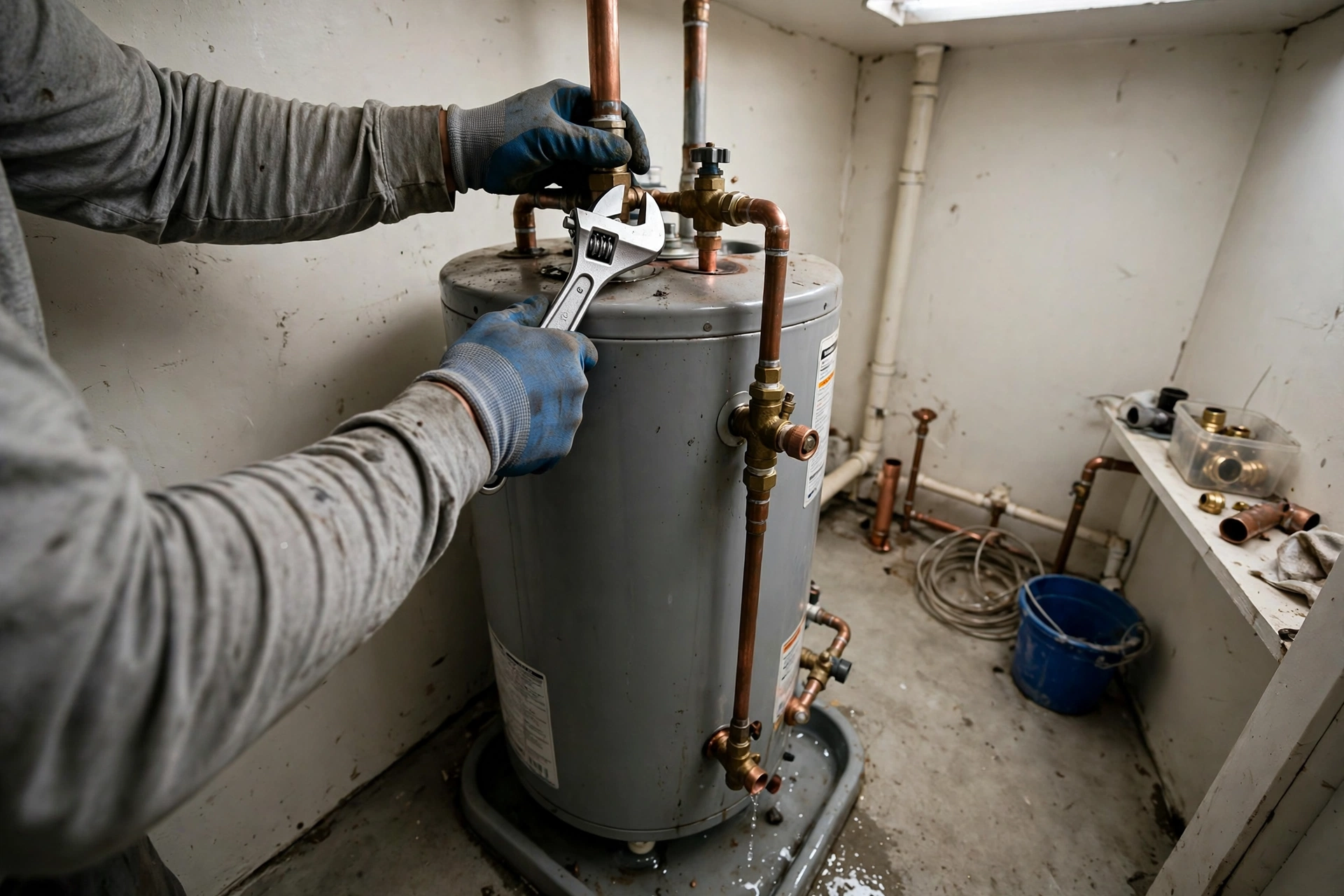
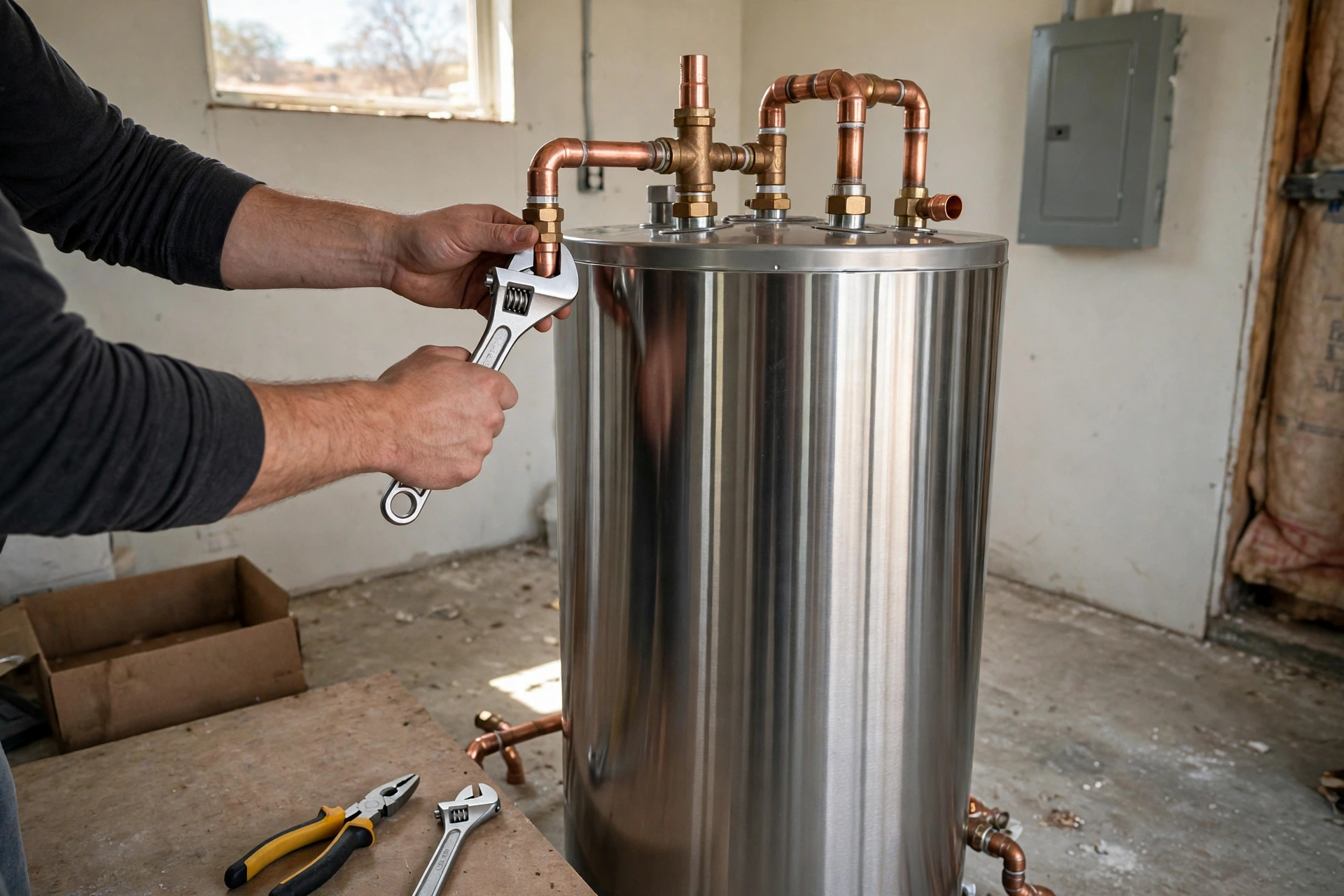
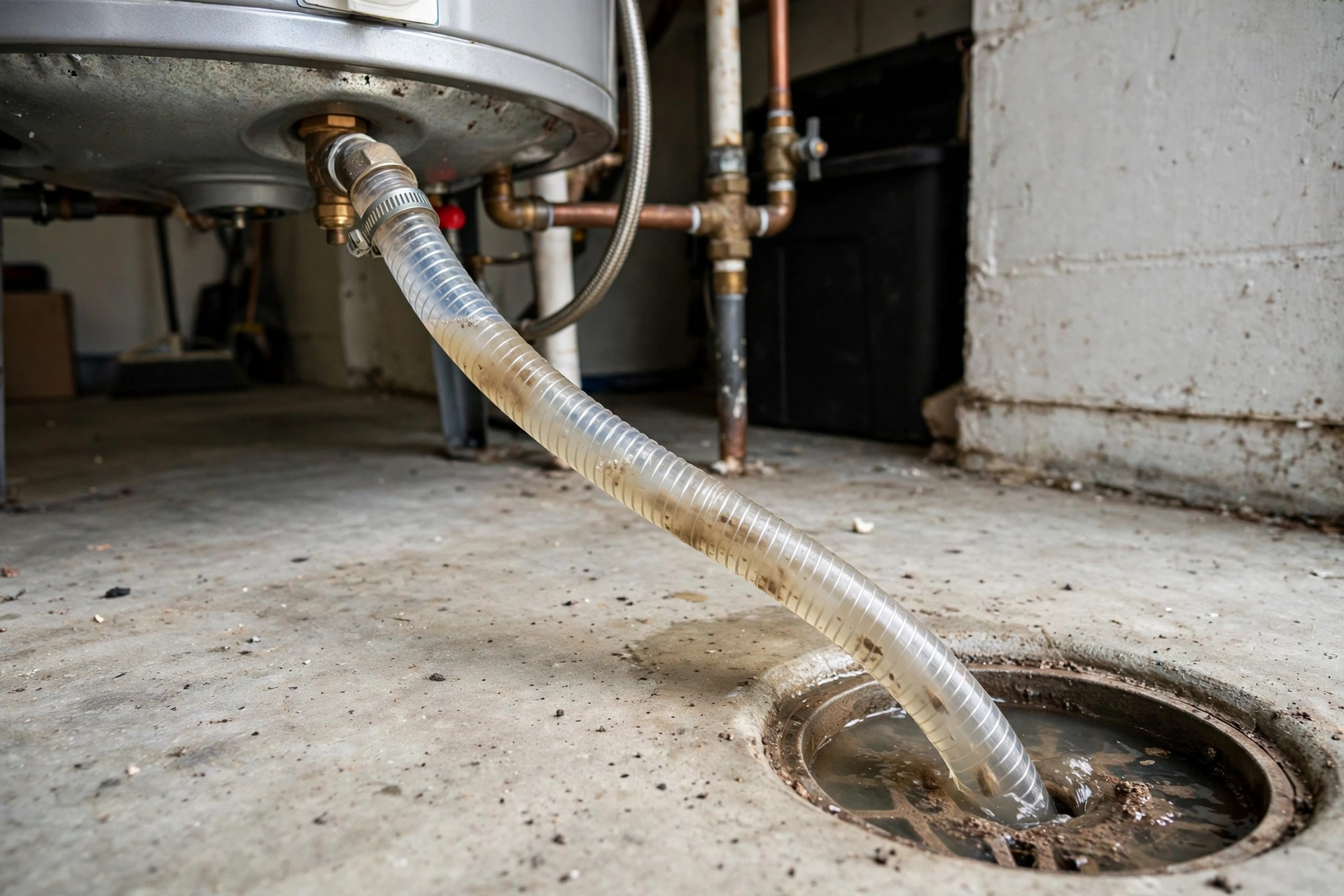
Knowing the sequence takes the mystery out of installation day. The contractor starts by shutting off water, gas or power, and draining the old tank, which can take a while if years of sediment have packed the drain valve. The old unit comes out, the new one goes in, and connections are made: water lines, gas line or electrical wiring, venting on gas units, and the temperature and pressure relief valve discharge line.
Then comes the part that separates careful work from rushed work. The tank is filled completely before the burner or elements are energized, because firing a dry tank destroys it. The contractor checks every connection for leaks, verifies proper draft on the vent for gas units, sets the thermostat to 120 degrees, and runs hot water at a nearby tap to confirm steady temperature. You should expect a walkthrough of what was done and what to watch for in the first week.
Most standard replacements in an accessible garage take a few hours. Closet installs in older Midland homes, gas line upgrades, or venting reroutes add time. The contractor should explain the plan before starting, not discover complications mid-job without telling you.
Related: water heater replacement service, protecting your new unit
Here is where Midland installations differ from installations anywhere else. Every plumber in town leads with hard water messaging because the 15 to 25 grains per gallon supply is the single biggest threat to a new unit's lifespan. Installing a water heater in Midland without a hard water plan is like buying a truck and never changing the oil. The contractors we connect you with treat protection as part of the installation, not an upsell.
Day-one protection starts with the anode rod: confirming the new unit has a quality rod and noting its type, since the rod is the tank's first line of defense against corrosion. Next is a full-port drain valve that makes future flushing actually practical, instead of the cheap plastic valve that clogs the first time sediment reaches it. An expansion tank gets installed where thermal expansion needs somewhere to go, protecting both the new unit and your home's plumbing.
For households ready to go further, the installation visit is the natural time to discuss whole-home water softening. Softened water dramatically slows scale buildup inside the tank and on elements. It is not required, and many Midland homes run for years on unsoftened water with diligent flushing, but the conversation belongs at installation time, when the plumbing is already open and the options are cheapest to implement.
Related: yearly flushing and maintenance, water heater repair
Where the unit sits matters as much as which unit you buy. Gas water heaters need combustion air and proper venting, which rules out some of the tight closets found in Midland's 1950s and 1960s oil boom homes unless the space is modified. Electric units are more flexible on placement but still need a drain pan with a proper drain line underneath, because any tank can eventually leak and the pan is what keeps a leak from becoming a flood.
Garage installations, common in Grassland Estates, Woodland Park, and newer Green Tree builds, need protection from vehicle impact and elevation of the ignition source above the garage floor. Closet installations need louvered doors or dedicated combustion air openings. Attic installs, rare but present, demand pans with drains and careful structural thought. Local code requirements cover all of this, and the contractor handles compliance as part of the job.
If your current unit sits somewhere questionable, installation day is the time to fix it. Moving a water heater a few feet to a safer, more serviceable location during a planned installation costs far less than relocating it during an emergency replacement later.
Related: gas unit venting and safety, emergency replacement help
 Water Heater Installation Questions?
Describe what your unit is doing and we will help arrange the next step.
It depends on your peak hour demand, not just bedroom count. A contractor will ask how many people shower, when they shower, and which appliances run hot water, then match tank gallons and recovery rate, or tankless flow rate, to that peak. Households with shift workers or teenagers usually need more capacity than the charts suggest.
A straightforward replacement in an accessible garage is typically done in a few hours, including draining the old tank, setting the new one, making connections, and testing. Closet installs in older homes, gas line upgrades, venting changes, or relocations add time. Your contractor should outline the expected timeline before work begins.
Standard tank-for-tank gas replacements usually work with the existing gas line. Tankless units are the common exception: their high BTU demand often requires a larger gas supply line. The contractor measures the line, calculates total demand including your furnace and stove, and tells you before installation day whether an upgrade is needed.
Usually yes, and that is the simplest path. The exception is older closet installs that no longer meet current requirements for combustion air, venting, or service clearance. In those cases the contractor will explain what needs to change and why. Sometimes a small relocation within the same area solves everything.
It can be a great move for households with relentless hot water demand or tight space, but go in with open eyes. Tankless installs often need gas line and venting upgrades, and they demand yearly descaling in Midland's hard water. A contractor can compare both paths for your specific home so the decision is based on your situation, not a sales pitch.
Not seeing your question? Request service and describe what your unit is doing.
Call (432) 321-0116Midland Water Heater Pros connects you with independent contractors who repair gas and electric water heaters …
Learn more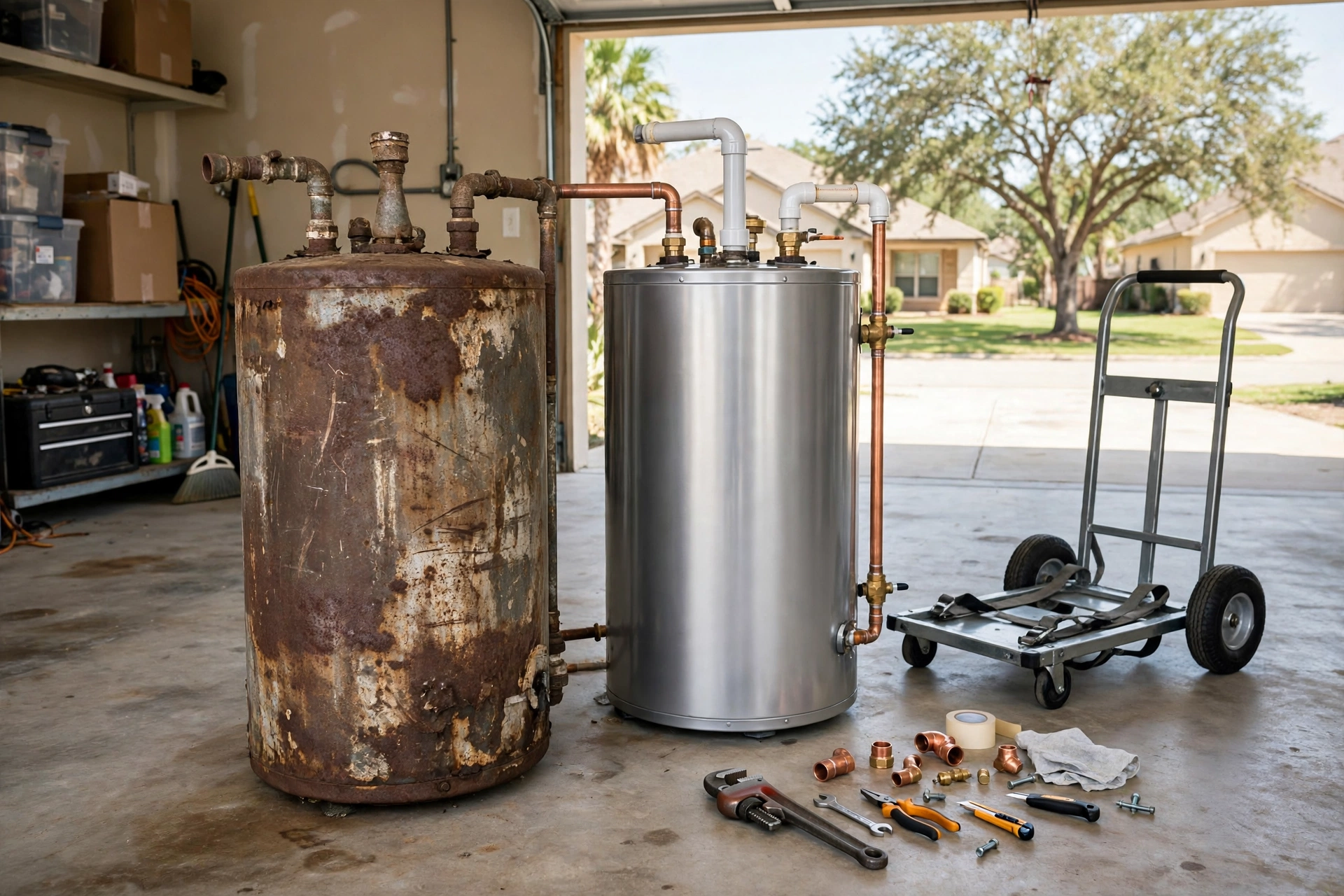
Every water heater reaches a point where another repair just delays the inevitable. Midland Water Heater Pros …
Learn more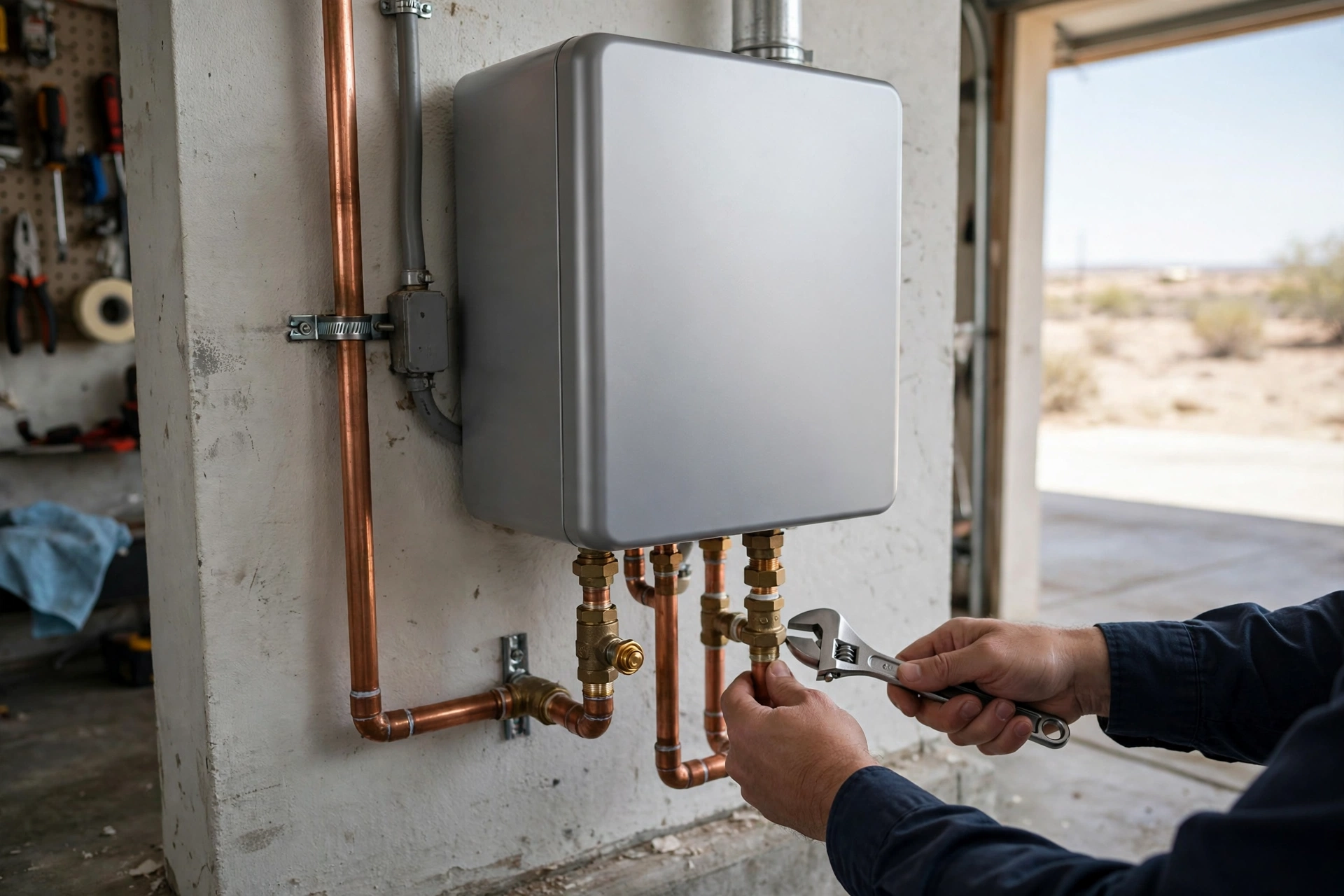
Tankless water heaters heat water only when you turn on the tap, which suits West Texas households with heavy,…
Learn moreHot Water, HandledA water heater installation is a decision you will live with for years, so sizing and setup matter more than brand names. Midland Water Heater Pros connects Midland homeowners with independent contractors who install gas and electric units matched to household demand, local water conditions, and the space available. Every installation plan starts with Midland's 15 to 25 grains per gallon hard water, because a unit protected from day one outlasts one that is not.