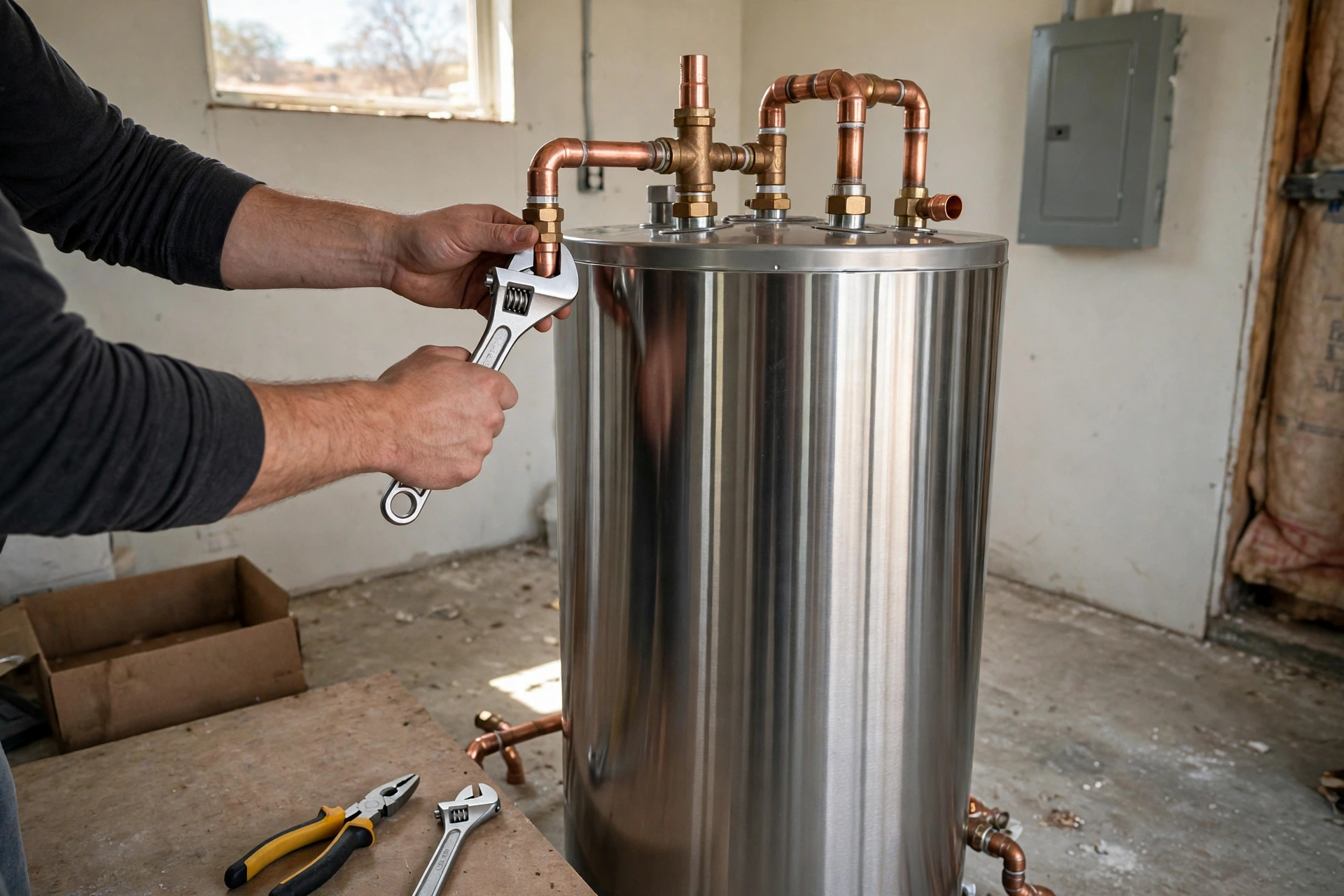
Water Heater Installation
A water heater installation is a decision you will live with for years, so sizing and setup matter more than b…
Learn moreFew household problems announce themselves like a failing water heater. You step into a cold shower on a workday morning, or you spot a dark puddle spreading across the garage floor, and suddenly the whole day bends around one appliance. Midland Water Heater Pros exists for exactly these moments. We connect Midland area homeowners with independent contractors who work on water heaters every day, so every repair starts with deep familiarity with West Texas equipment.
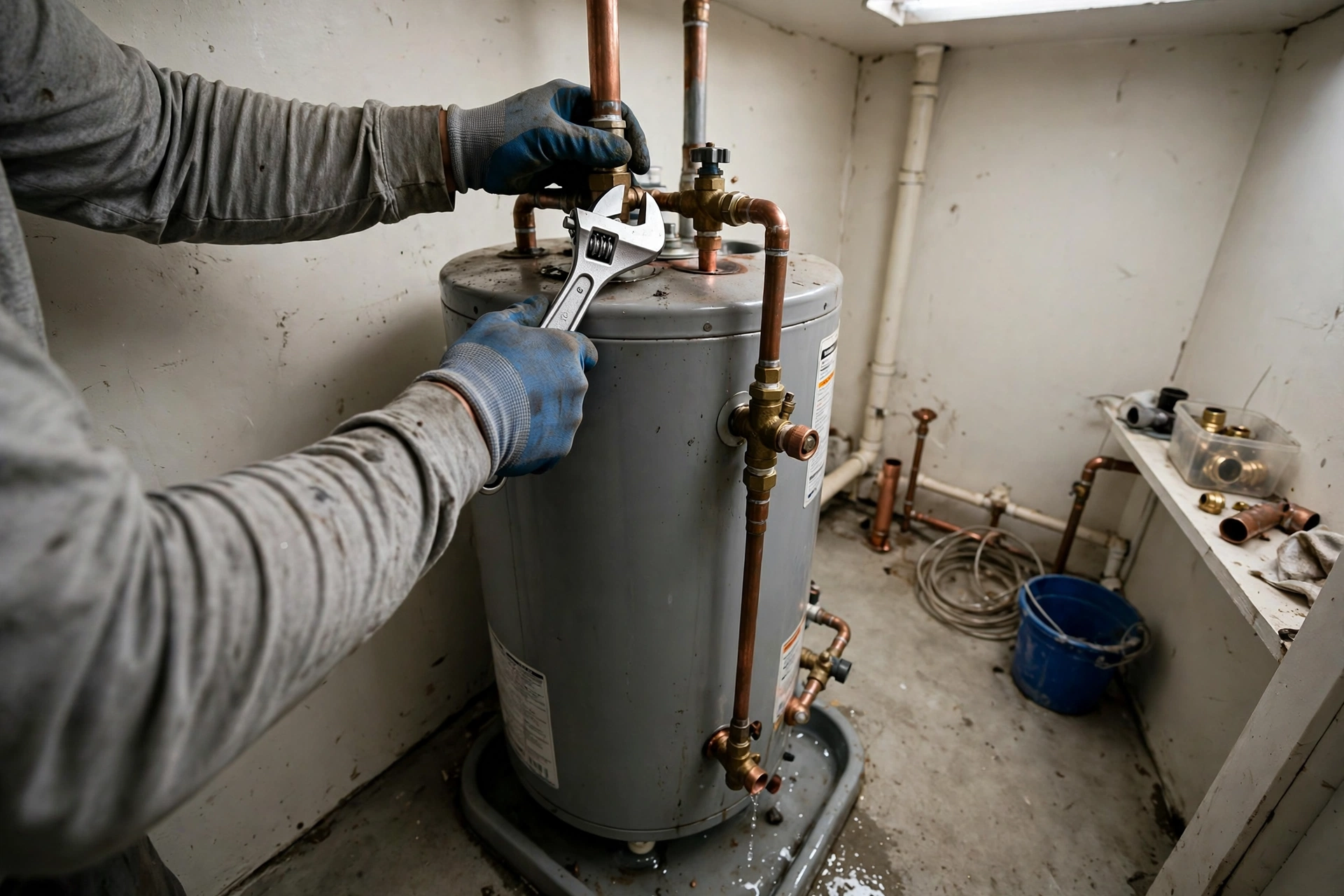
Midland conditions are unusually hard on hot water equipment. The municipal supply carries 15 to 25 grains of hardness per gallon, which puts it firmly in the very hard category, and every gallon that enters your tank leaves minerals behind. Summer garage temperatures climb past 100 degrees for months, West Texas dust finds its way into burner assemblies, and the occasional hard winter freeze can crack fittings that survived all summer. Repairs here have to account for those local realities, not just the part that failed.
The good news is that most water heater problems are repairable when they are caught in time. A rumbling tank usually needs a flush, not a funeral. A pilot that will not stay lit is often a worn thermocouple, a small part with a big job. This page covers the warning signs Midland homeowners see most, how hard water causes them, and how to protect your repair so it lasts.
Water heaters rarely quit without warning. They send signals for weeks or months, and learning to read those signals is the difference between a modest repair and a flooded garage. The most common early sign in Midland is noise: rumbling, popping, or crackling sounds when the burner fires or the elements heat up. That noise is steam forcing its way through a layer of hardened sediment at the bottom of the tank, and in a 15 to 25 grains per gallon water supply, that layer builds fast.
Other clues are visual. Rust-colored hot water from the tap, moisture or staining around the base of the tank, or a temperature and pressure relief valve that keeps dripping all point to trouble inside. Then there is the obvious one: water that never gets fully hot, runs out halfway through a shower, or swings between hot and cold. If you notice any of these, have the unit looked at before a small fault turns into a tank failure.
Related: yearly water heater maintenance, emergency water heater repair
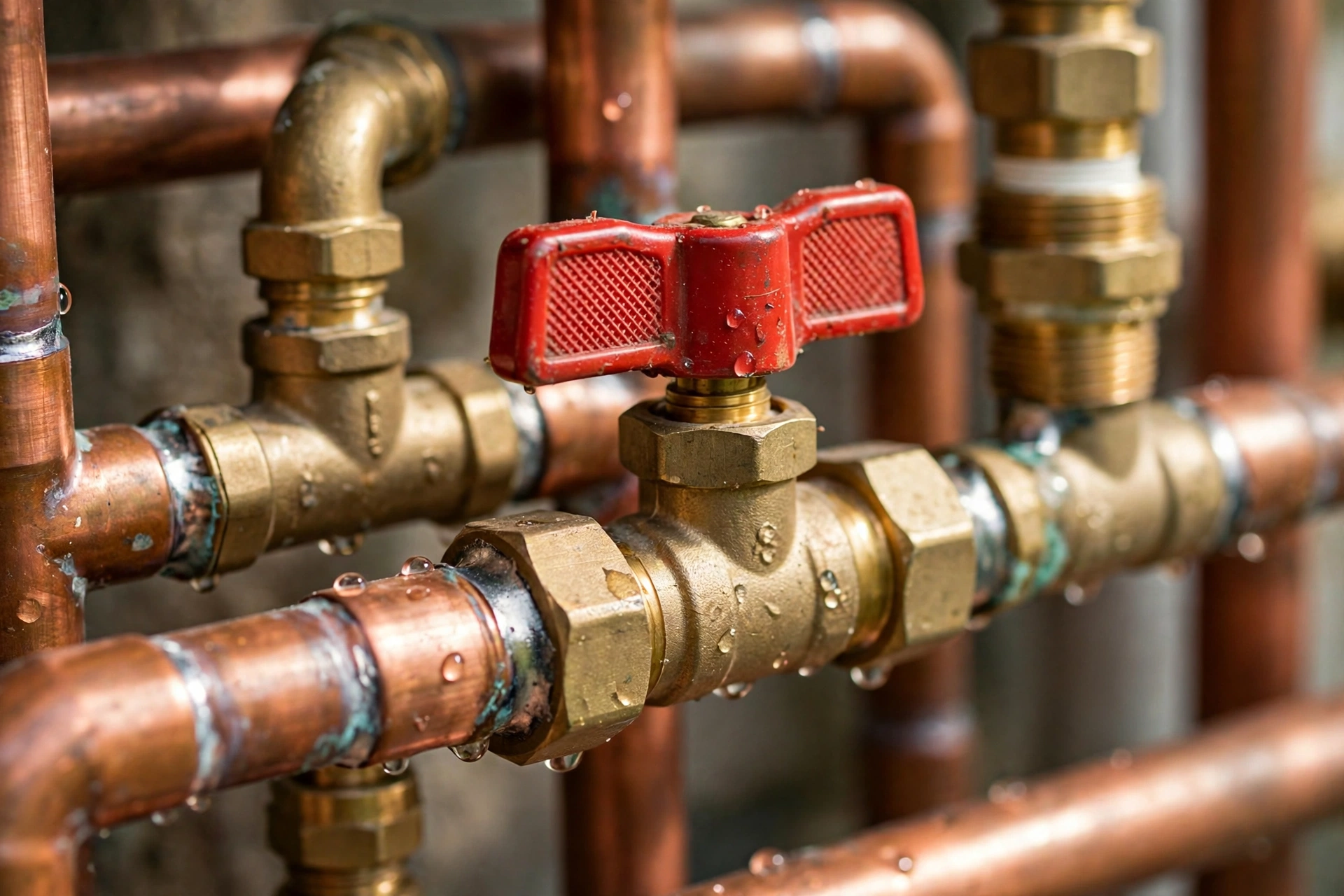
Ask any plumber in the Permian Basin what kills water heaters, and hard water is the first answer. Every local shop, from the big names that have served Midland for decades to the newest outfits, leads with hard water messaging, because it is the honest truth about this market. At 15 to 25 grains per gallon, Midland water deposits calcium and magnesium with every heating cycle. Those minerals settle to the bottom of the tank and bake into a thick, concrete-like sediment layer.
Sediment does more than make noise. It insulates the water from the heat source, forcing gas burners to run longer and electric elements to work harder. That extra strain overheats the tank bottom, shortens the life of thermostats, and speeds up corrosion of the anode rod and tank lining. A tank that never gets flushed can accumulate several inches of sediment in just a few years, which is why so many Midland repairs trace back to the same root cause.
The pattern is so consistent that experienced contractors diagnose Midland units differently than units in soft water cities. They check the anode rod first, expect heavy sediment, and look for the secondary damage it causes: overheated elements, cracked dip tubes, and weakened relief valves.
A good repair starts with careful diagnosis, not a parts swap. When the contractor arrives, the visit begins with your description of the symptoms and a check of the basics: power or gas supply, thermostat settings, and the age of the unit. Many no-hot-water calls turn out to be a tripped breaker, a blown fuse at the disconnect, or a thermostat set far below the recommended 120 degrees. Those take minutes to resolve once someone who knows the equipment takes a look.
From there, the contractor tests the components themselves. On electric units, both heating elements and thermostats get checked with a meter, because a failed upper element produces very different symptoms than a failed lower one. On gas units, the pilot assembly, thermocouple, burner, and venting all get inspected. The anode rod, the relief valve, and the expansion tank get checked too, since these safety and longevity parts often fail quietly in the background while everyone focuses on the obvious symptom.
Once the actual failure is identified, you get your options in plain terms: what the repair involves, how long it should hold, and whether the unit's age and condition make replacement the smarter move. You decide with full information, and a reputable contractor will tell you when a repair is throwing good effort after a dying tank.
Related: gas water heater services, electric water heater services
After years of working on Permian Basin water heaters, the same failures repeat. On electric units, sediment-baked lower elements top the list, followed by thermostats that drift out of calibration and stop calling for heat at the right time. On gas units, thermocouples that no longer hold a pilot flame and burners clogged with West Texas dust are the usual suspects. Each of these is a straightforward repair when it is caught before secondary damage sets in.
Contractors also handle the messier jobs: leaking drain valves, corroded supply connections, failed expansion tanks, and dip tubes that have crumbled and left you with lukewarm water from a full tank. No good contractor will patch a tank leaking from the tank body itself. Once the steel wall is compromised, no repair is safe or lasting.
Related: when replacement makes more sense, preventive maintenance visits
A repair fixes today's failure, but a few habits decide how long the fix holds. The single most valuable habit in Midland is flushing sediment from the tank at least once a year. With 15 to 25 grains of hardness per gallon, skipping flushes lets sediment rebuild fast, and that sediment is what killed your element or overheated your tank bottom in the first place. Newer tanks in Grassland Estates and Woodland Park need this as much as the 1950s closet tanks downtown.
Keep the thermostat at 120 degrees, which is hot enough for comfortable showers and dishwashing while limiting scald risk and slowing mineral precipitation. Test the relief valve every six months by lifting its lever briefly and confirming water flows, then stops. Glance at the area around the tank now and then for moisture, especially after the rare hard freeze. Small attention between service visits adds years to a water heater's life in West Texas.
Related: schedule yearly maintenance, tankless water heater options
 Water Heater Troubleshooting Questions?
Describe what your unit is doing and we will help arrange the next step.
Rumbling comes from steam bubbles forcing their way through sediment that has settled and hardened on the tank bottom. Midland's very hard water, at 15 to 25 grains per gallon, builds that sediment layer faster than in most cities. A professional flush usually quiets the tank. If the noise returns quickly, the anode rod may be depleted and the tank may be nearing the end of its life.
Most common repairs, like replacing a heating element, thermostat, or thermocouple, are finished within a single visit once the diagnosis is complete. Contractors who work the Permian Basin daily stock the parts that fail most often on local units, which keeps return trips rare. Jobs involving corroded fittings or hard-to-reach closet installs can take longer, and a good contractor will say so upfront.
It depends where the leak starts. Leaks from fittings, valves, or supply connections can usually be repaired. Water seeping from the tank body itself means the steel wall has failed, and no safe or lasting repair exists. In that case, replacement is the only responsible recommendation, and the contractor should explain exactly why.
That sulfur smell comes from bacteria reacting with the anode rod inside the tank, and it shows up more often in hard water areas like Midland. Replacing the standard anode rod with a different alloy type usually solves it, and a full flush helps too. It is unpleasant but not typically dangerous. A contractor can confirm the cause in one visit.
The most common cause is a worn thermocouple, the small sensor that tells the gas valve the pilot is lit. When it weakens, the valve shuts off gas as a safety measure. Drafts from garage doors, dust-clogged pilot assemblies, and West Texas wind gusts can also blow pilots out. A contractor will clean the assembly, test the thermocouple, and check venting before replacing anything.
Not seeing your question? Request service and describe what your unit is doing.
Call (432) 321-0116A water heater installation is a decision you will live with for years, so sizing and setup matter more than b…
Learn more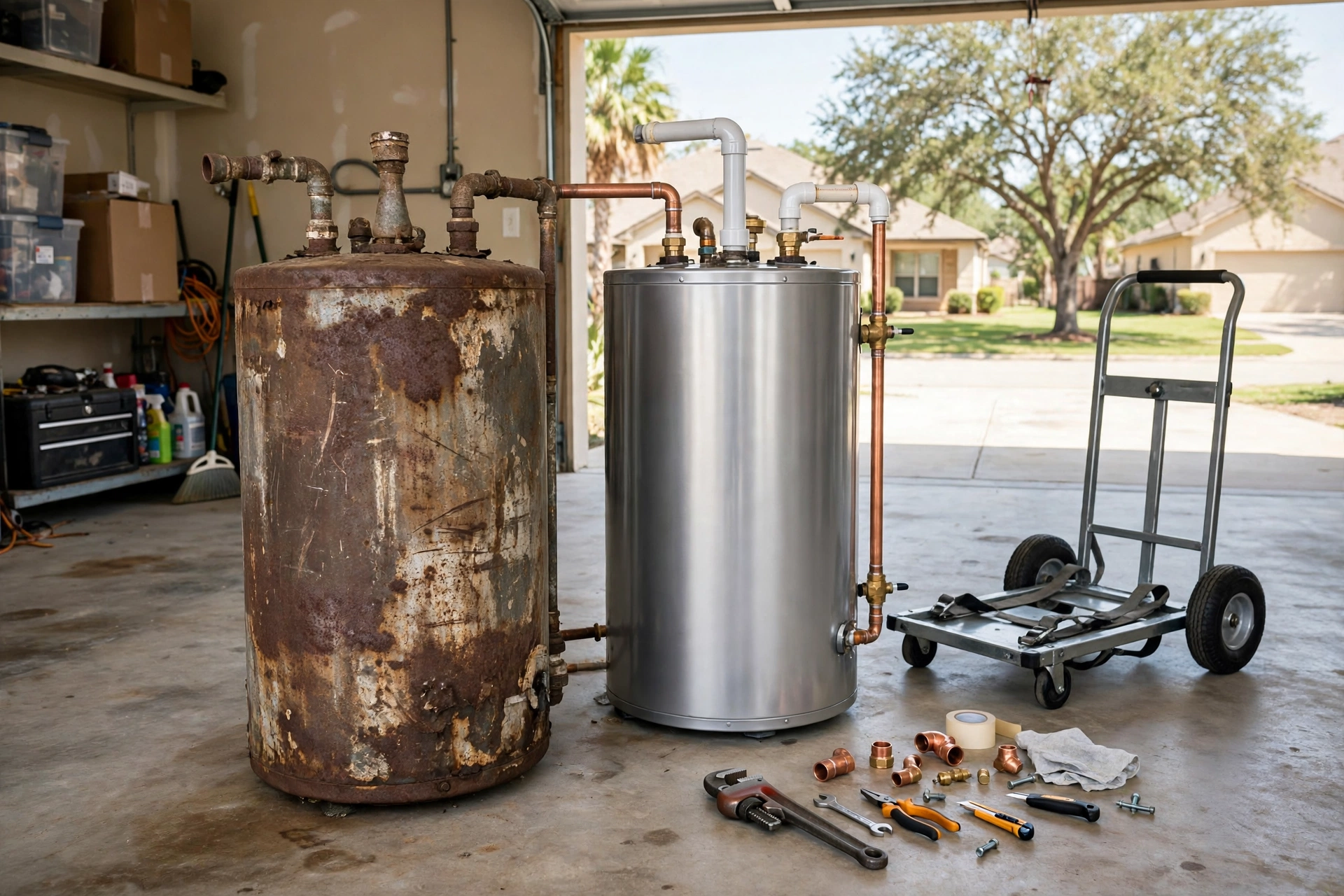
Every water heater reaches a point where another repair just delays the inevitable. Midland Water Heater Pros …
Learn more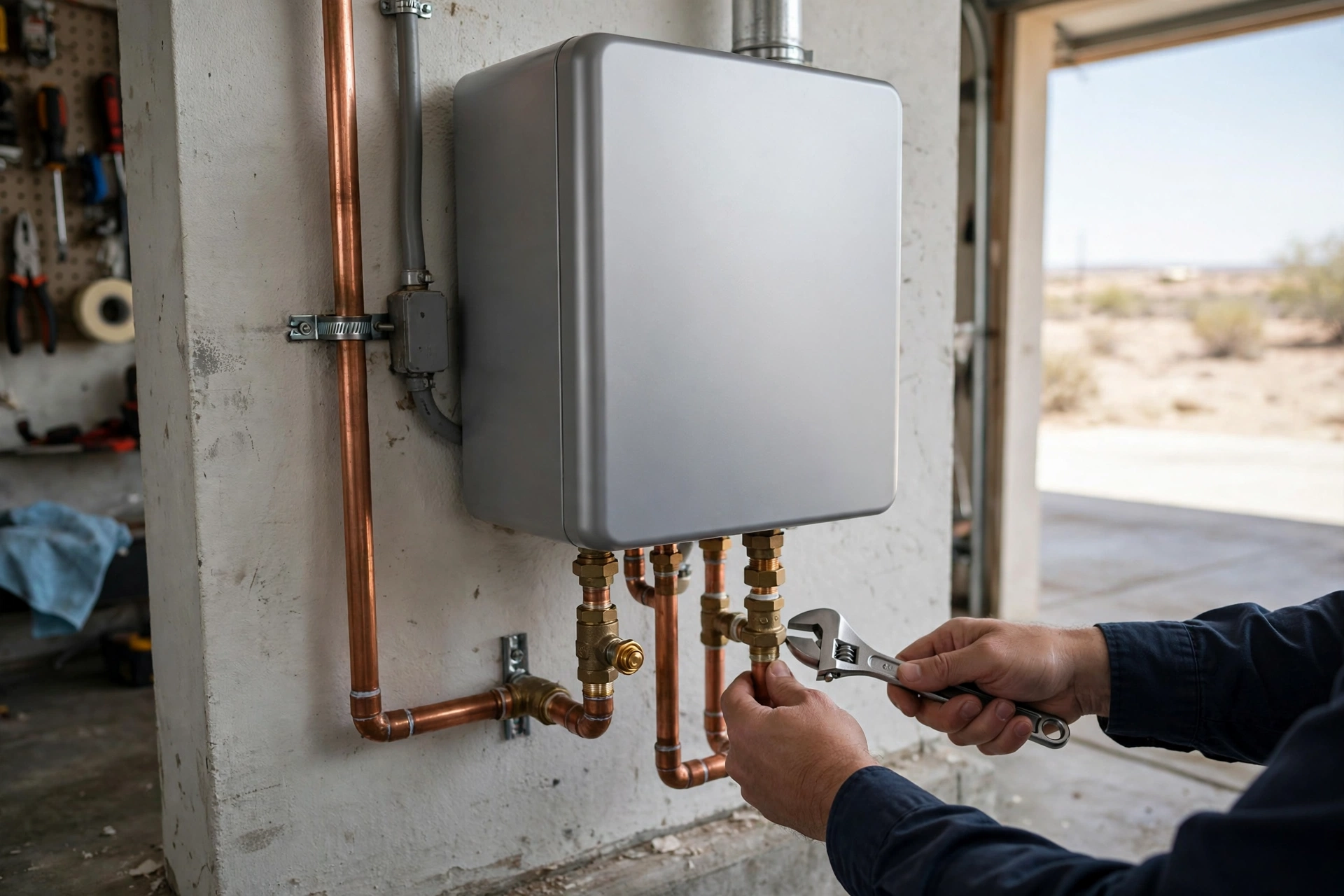
Tankless water heaters heat water only when you turn on the tap, which suits West Texas households with heavy,…
Learn moreHot Water, HandledMidland Water Heater Pros connects you with independent contractors who repair gas and electric water heaters across Midland and the Permian Basin. From failed heating elements and worn thermocouples to rumbling, sediment-packed tanks, most problems are diagnosed in a single visit. Because Midland water runs 15 to 25 grains per gallon of hardness, catching trouble early is the difference between a straightforward repair and a ruined tank.