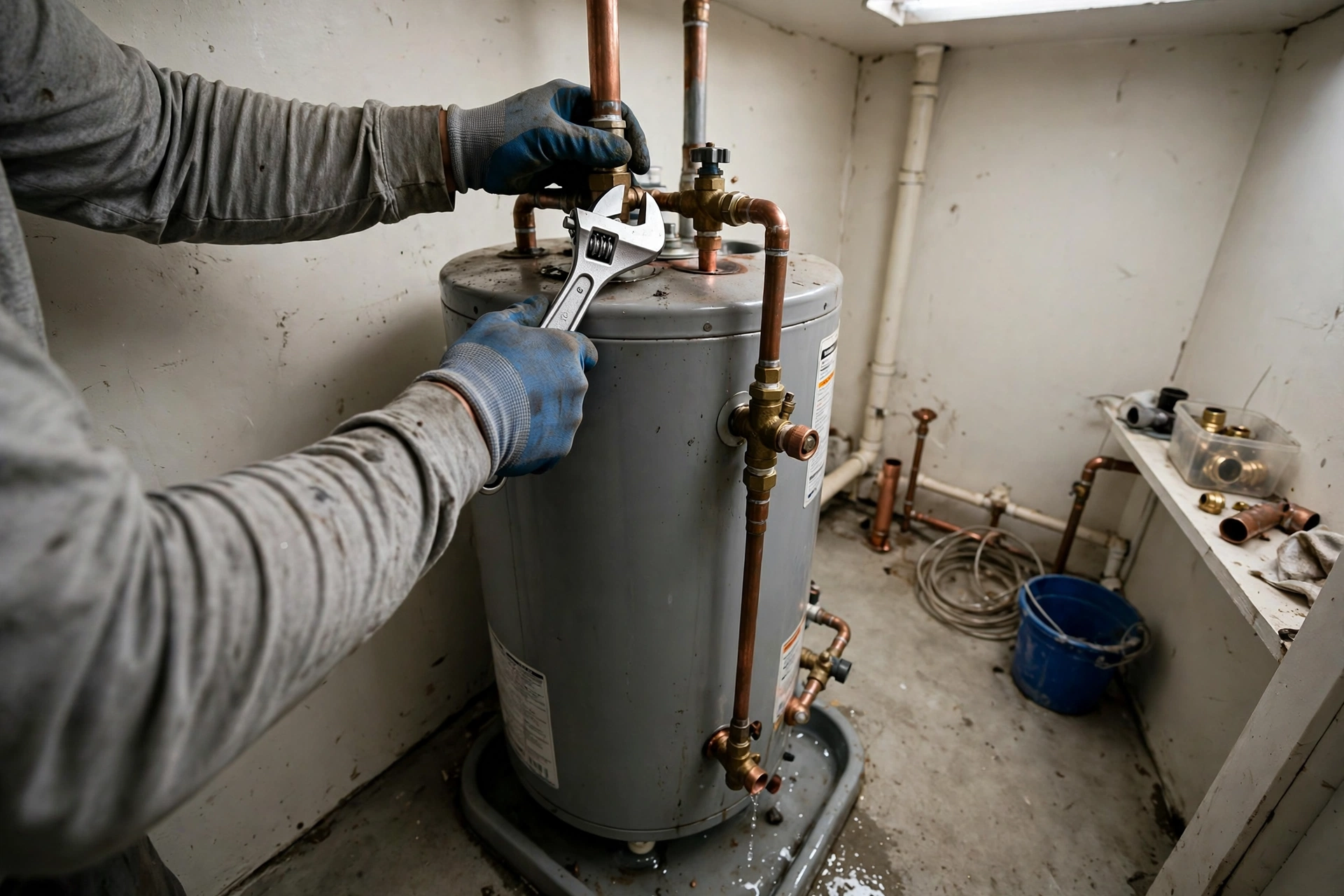
Water Heater Troubleshooting
Midland Water Heater Pros connects you with independent contractors who repair gas and electric water heaters …
Learn moreElectric water heaters do not get the attention gas units do, but they deserve respect for their simplicity. No pilot, no burner, no vent, no combustion air calculations. Two heating elements, two thermostats, a tank, and a dedicated circuit. When they work, they work quietly for years. When they fail, the symptoms are usually clean and the diagnosis quick, making electric units some of the most straightforward to service.
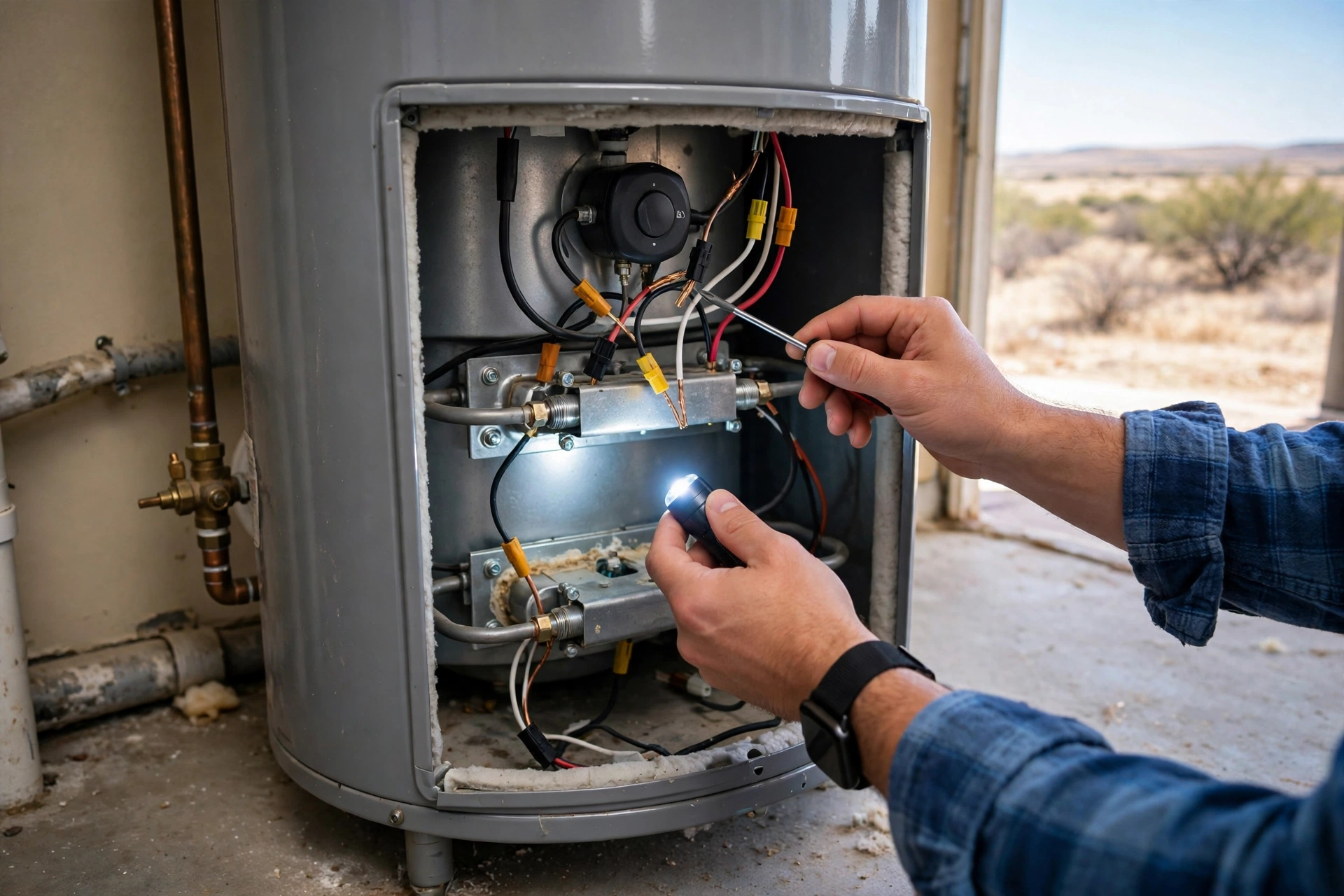
In Midland, electric units face one dominant enemy, and it is the same one every local plumber talks about: hard water at 15 to 25 grains per gallon. Sediment settles directly onto the lower element, which then overheats trying to push heat through the mineral layer and burns out. The upper element picks up the slack until it fails too, and the household gets a slow fade from plenty of hot water to none. Nearly every electric repair in the Permian Basin has sediment somewhere in its backstory.
This page covers how electric units fail in hard water, the element and thermostat repairs contractors perform most, the electrical safety checks that matter, how electric installations and upgrades work, and the habits that keep an electric tank efficient.
An electric water heater heats with two elements, one upper and one lower, controlled by two thermostats that hand off to each other. The upper thermostat heats the top of the tank first for quick recovery, then the lower takes over for the bulk of the water. It is a clever arrangement, and hard water attacks it at its weakest point: the lower element sits exactly where sediment accumulates.
The failure sequence is predictable. Sediment blankets the lower element, the element overheats and burns out, and the upper element tries to carry the whole tank alone. Hot water runs out faster and faster until the upper element fails from the strain or the thermostat gives up. Homeowners experience this as a gradual decline: showers that used to be endless now go cold halfway through, then the water never really gets hot at all.
Thermostats suffer their own hard water damage. Mineral-coated sensors read temperatures inaccurately, thermostats stick or drift out of calibration, and the high-limit safety switch trips more often as the tank overheats beneath its sediment blanket. A contractor diagnosing an electric unit in Midland expects all of this and tests the full chain, because replacing one failed part while its partner is weeks from failing helps nobody.
Related: electric unit repair service, flushing to protect elements
Element replacement is the bread and butter of electric water heater repair. The contractor shuts off power at the breaker, verifies it is dead with a meter, drains the tank below the element level, and swaps the failed element. It is simple when the element comes out cleanly. In hard water tanks, elements sometimes come out coated in rock-like scale or seize in their threads, which is where experience and the right tools matter.
Thermostat diagnosis takes more judgment. A failed upper thermostat kills all hot water. A failed lower thermostat leaves you with a small amount of very hot water that runs out fast. A thermostat stuck closed overheats the tank until the high-limit trips. The contractor tests both thermostats and both elements with a meter rather than guessing, because the symptoms overlap and replacing the wrong part wastes everyone's time.
Quality of replacement parts matters more than most homeowners realize. In 15 to 25 grains per gallon water, a contractor will recommend elements suited to hard water conditions and set both thermostats to 120 degrees during the repair. The visit should also include a look at the anode rod and a conversation about flushing, because the sediment that killed the element is still in the tank.
Related: full diagnostic repair visits, urgent no-hot-water help
An electric water heater is a major electrical load, typically on a dedicated 240 volt, 30 amp circuit, and the electrical side deserves the same attention as the plumbing. Loose wire connections at the elements overheat, scorch insulation, and trip breakers. Corroded connections in humid garage environments do the same. A contractor checks the wiring compartment on every electric service visit, looking for discoloration, brittleness, or looseness that precedes failure.
Repeated breaker trips are the electrical system's way of asking for help. A breaker that trips once after a storm is weather. A breaker that trips weekly is a failing element shorting to ground, a loose connection heating up, or an undersized or worn breaker. Repeated resets without diagnosis risk the wiring. A contractor finds the cause rather than just flipping the breaker back on.
The disconnect switch near the unit matters too. Code requires a way to cut power at the unit for safe service, and older Midland installs sometimes lack a proper disconnect or have one that has seen better days. Electrical safety on a water heater is not complicated, but it is unforgiving of shortcuts, which is why this work belongs with someone who services these units daily.
Related: proper electric installations, electrical troubleshooting
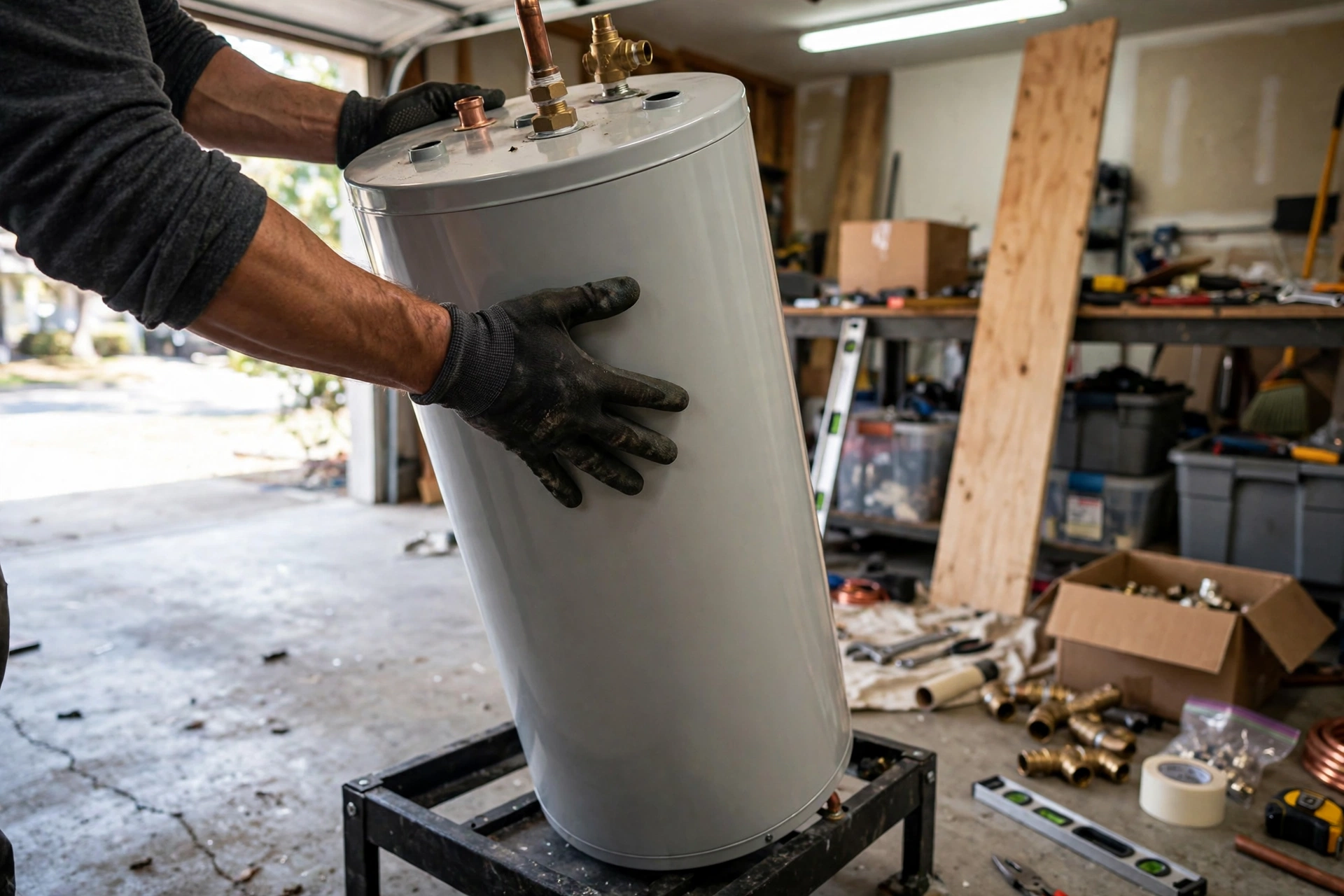
Electric installations are refreshingly straightforward compared to gas: no venting, no combustion air, no gas line sizing. The work centers on the electrical supply, a dedicated 240 volt circuit with proper wire gauge and breaker size, the water connections, the relief valve discharge, the drain pan, and the expansion tank. In homes that already have the circuit in place, a tank-for-tank electric replacement is among the quickest water heater jobs there is.
Panel capacity becomes the question in upgrades and conversions. Switching from gas to electric, or upsizing significantly, may require a new dedicated circuit run from the panel, and older panels in Midland's mid-century homes sometimes lack the spare capacity. The contractor assesses the panel during the consultation, so the electrical work is planned and permitted properly rather than discovered mid-installation.
Outlying areas like Greenwood and Gardendale, where many homes never had gas service, run electric units as the default, and well water there can be even harder than city supply. Installations there get the same hard water protection as anywhere else: quality anode rod, full-port drain valve, and a maintenance plan that respects what local water does to elements.
Related: installation planning and sizing, comparing gas options
Electric water heaters convert nearly all their electricity into heat, so waste comes from heat escaping the tank or from heating water nobody uses, not from combustion inefficiency. The thermostat setting is the first lever: 120 degrees delivers comfortable hot water for every normal household task while limiting standby loss and slowing the mineral precipitation that plagues Midland tanks. Every degree above that is heat you paid for and do not need.
Sediment is the second lever, and in 15 to 25 grains per gallon water it is a big one. A sediment-buried lower element runs longer cycles to heat the same water, and those longer cycles show up on the electric bill month after month. Annual flushing keeps heat transfer clean, which is an efficiency measure as much as a longevity measure. The quietest, quickest-recovering electric tank in Midland is almost always the one that gets flushed.
Insulation details round it out: an insulation blanket on older tanks, pipe insulation on the first few feet of hot water line, and keeping the unit out of unconditioned extremes where practical. None of these is dramatic alone. Together with proper maintenance, they keep an electric unit running as designed instead of fighting its own sediment.
 Electric Water Heater Services Questions?
Describe what your unit is doing and we will help arrange the next step.
The usual suspects are a tripped breaker, a failed upper heating element, or a failed upper thermostat. Check the breaker first, since that is a quick fix. If the breaker is fine, a contractor meter-tests both elements and thermostats to find the failed component. In Midland, sediment-buried lower elements are the most common root cause behind the failure chain.
Watch the symptoms. No hot water at all often means the upper element or its thermostat failed. Hot water that runs out unusually fast points to the lower element, which sits in the sediment zone and fails most often in hard water. Lukewarm water that never gets fully hot can mean either. A meter test during a service visit gives a definitive answer in minutes.
A breaker that trips repeatedly is protecting you from a real problem: usually an element shorting to ground, a loose wire connection overheating, or a worn breaker. Do not keep resetting it without diagnosis. A contractor finds whether the fault is in the elements, the wiring, or the breaker itself, and fixes the cause rather than the symptom.
Yes, if gas service reaches your property. The conversion needs a gas line run to the location, proper venting installed, and adequate combustion air for the space. It is a bigger project than a straight replacement, so it makes sense when you have a clear reason, like faster recovery for a large household. A contractor can compare both options for your home.
120 degrees is the recommended setting for most households. It provides comfortably hot water for showers, laundry, and dishwashing while limiting scald risk, reducing standby energy waste, and slowing mineral precipitation in Midland's hard water. Both the upper and lower thermostats should be set to the same temperature.
Not seeing your question? Request service and describe what your unit is doing.
Call (432) 321-0116Midland Water Heater Pros connects you with independent contractors who repair gas and electric water heaters …
Learn more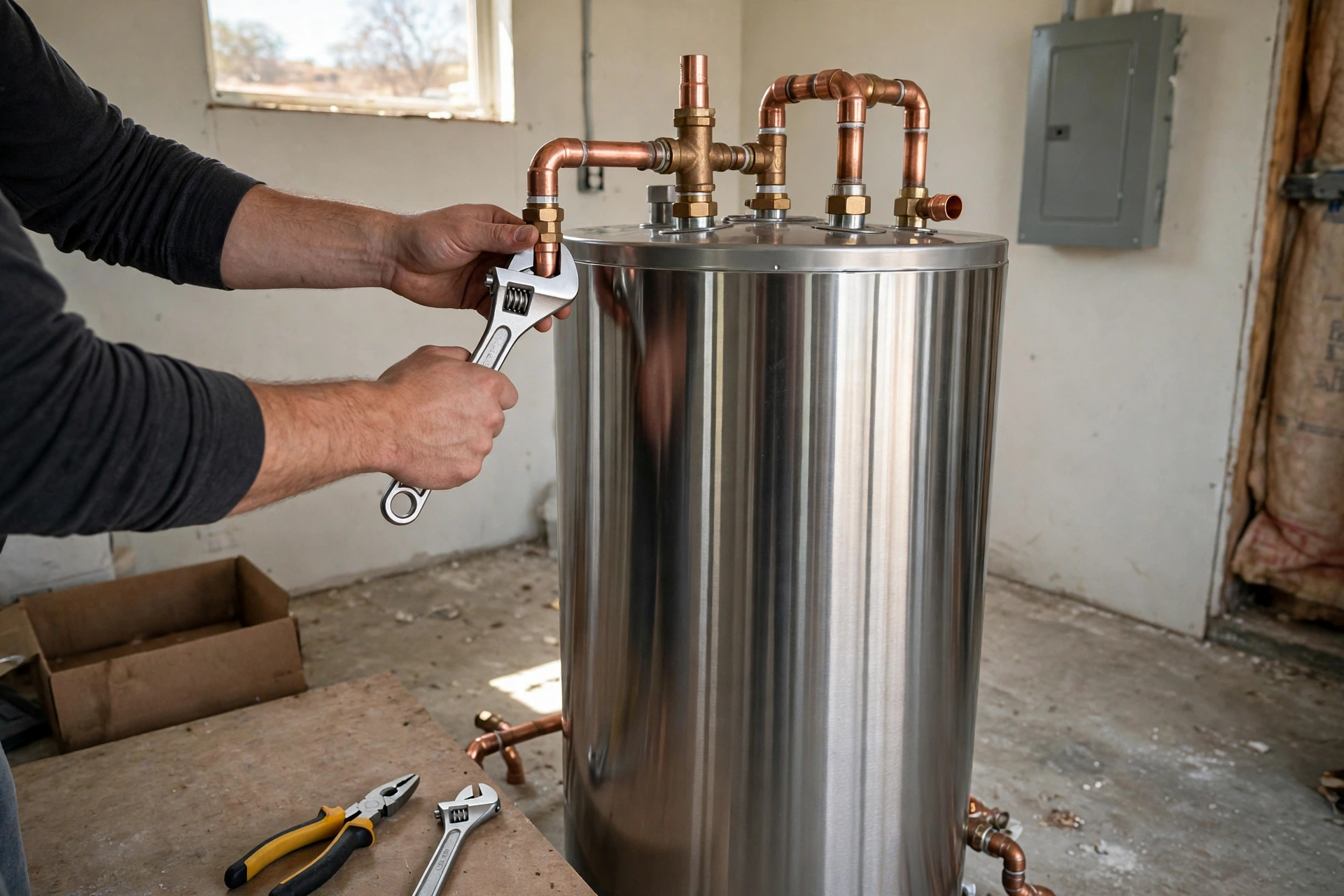
A water heater installation is a decision you will live with for years, so sizing and setup matter more than b…
Learn more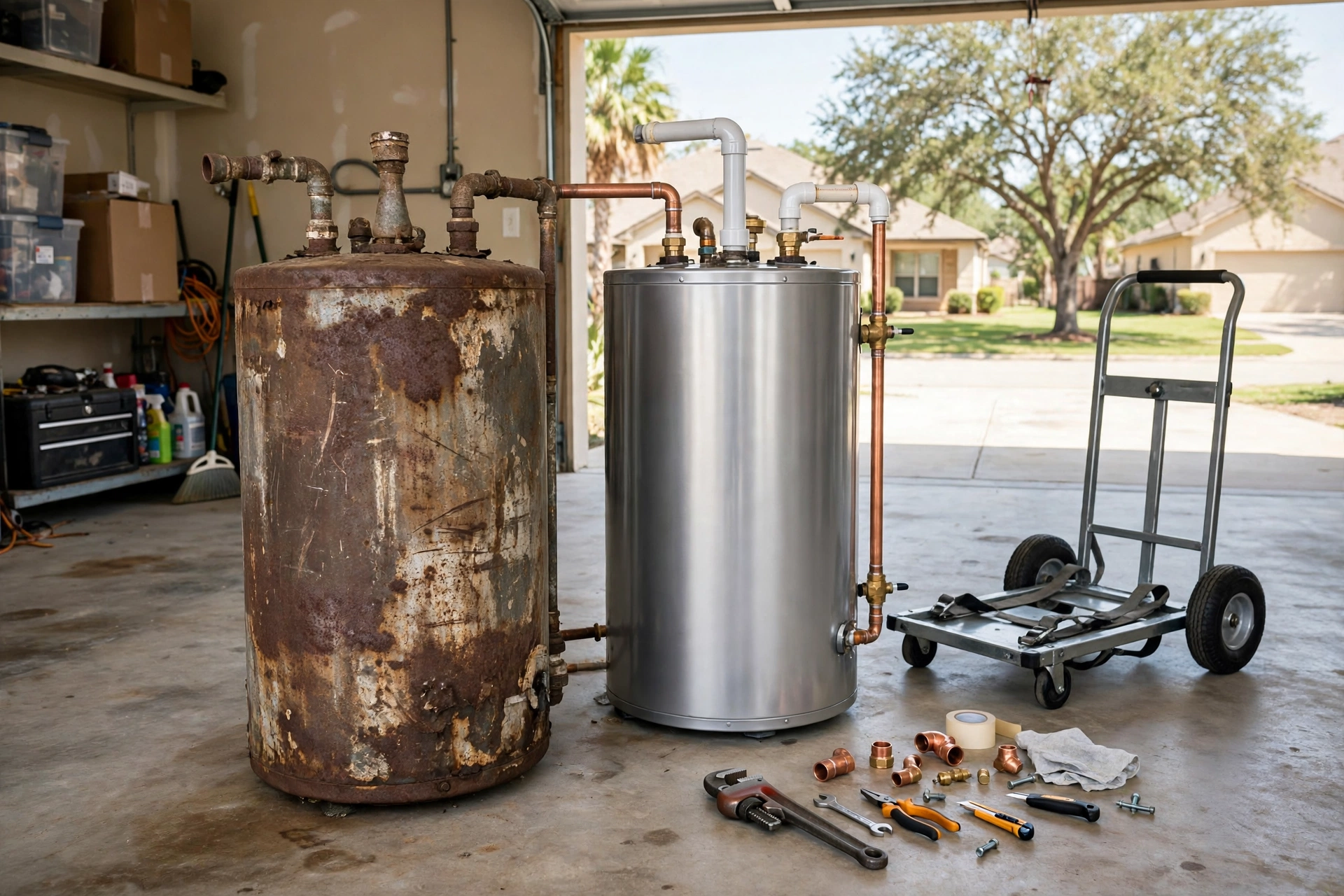
Every water heater reaches a point where another repair just delays the inevitable. Midland Water Heater Pros …
Learn moreHot Water, HandledElectric water heaters are common in Midland homes without gas service and in outlying areas like Greenwood and Gardendale. They are simple machines, but Midland's 15 to 25 grains per gallon hard water buries lower elements in sediment and burns them out early. Midland Water Heater Pros connects you with independent contractors who repair, install, and maintain electric units across the Permian Basin.