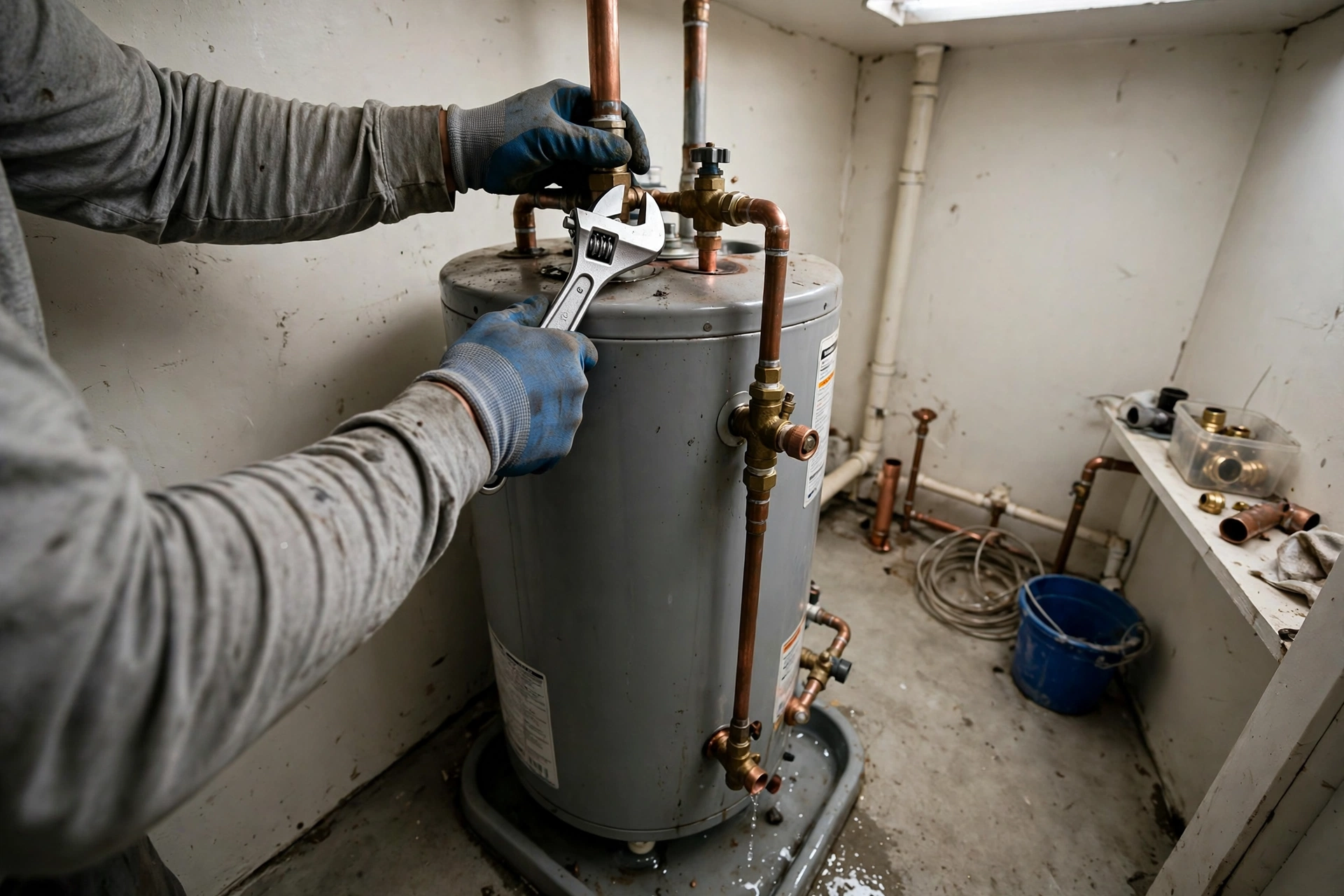
Water Heater Troubleshooting
Midland Water Heater Pros connects you with independent contractors who repair gas and electric water heaters …
Learn moreWater heater emergencies have terrible timing. The tank lets go on a Sunday evening. The pilot dies during a West Texas cold snap when the house is full of guests. You wake up to a garage floor covered in water and no idea where it is coming from. These moments are stressful, and the most valuable thing in them is knowing exactly what to do in the first ten minutes.
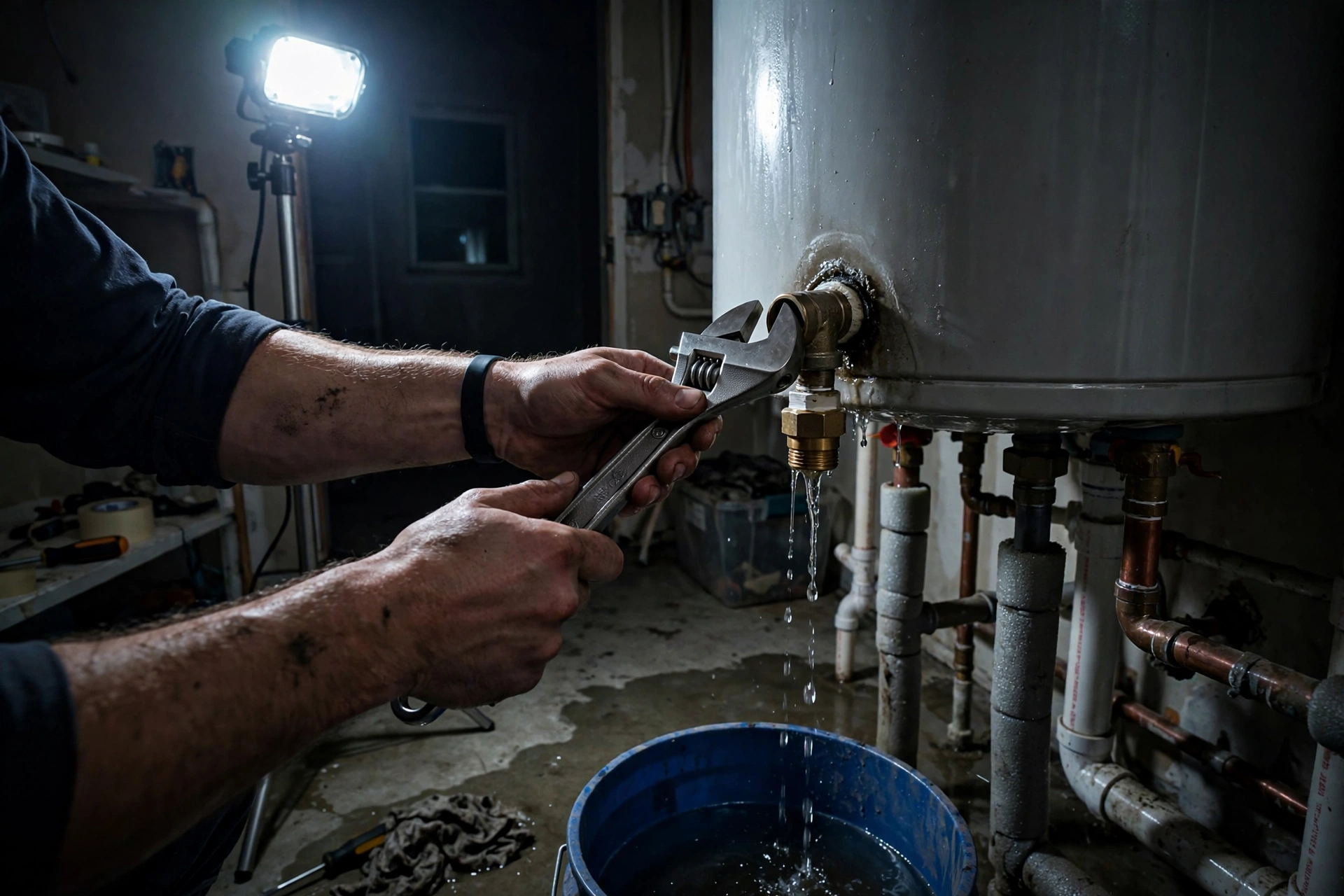
That is what this page is for: what counts as an emergency, the steps to take before help arrives, how to handle a leaking tank or sudden hot water loss, and how to prevent the next crisis. Read it now, while nothing is leaking.
One critical note first: if you smell gas around your water heater, treat it as an emergency immediately. Do not light anything, do not flip switches, leave the house, and call your gas utility or emergency services from outside. Water damage is property. Gas is safety. The order of operations matters.
Not every water heater problem needs immediate help, and knowing the difference saves everyone time. A true emergency involves active water damage, a safety hazard, or a complete loss of hot water with vulnerable people in the home. A tank actively leaking onto the floor is an emergency. Water spraying from a failed connection is an emergency. Any smell of gas near the unit is an emergency, full stop.
Total hot water loss is usually miserable but survivable until a scheduled visit. It becomes urgent with infants, elderly family members, or medical needs in the home, or when a West Texas freeze is bearing down. When in doubt, request service and describe the situation.
Rumbling noises, lukewarm water, a pilot that went out once and relit fine, these deserve prompt attention but rarely demand a middle-of-the-night response. A contractor can triage by description: tell them what the unit is doing, how much water is involved, and whether gas is part of the picture, and they will tell you honestly whether it can wait for morning.
Related: standard water heater repair, emergency tank replacement
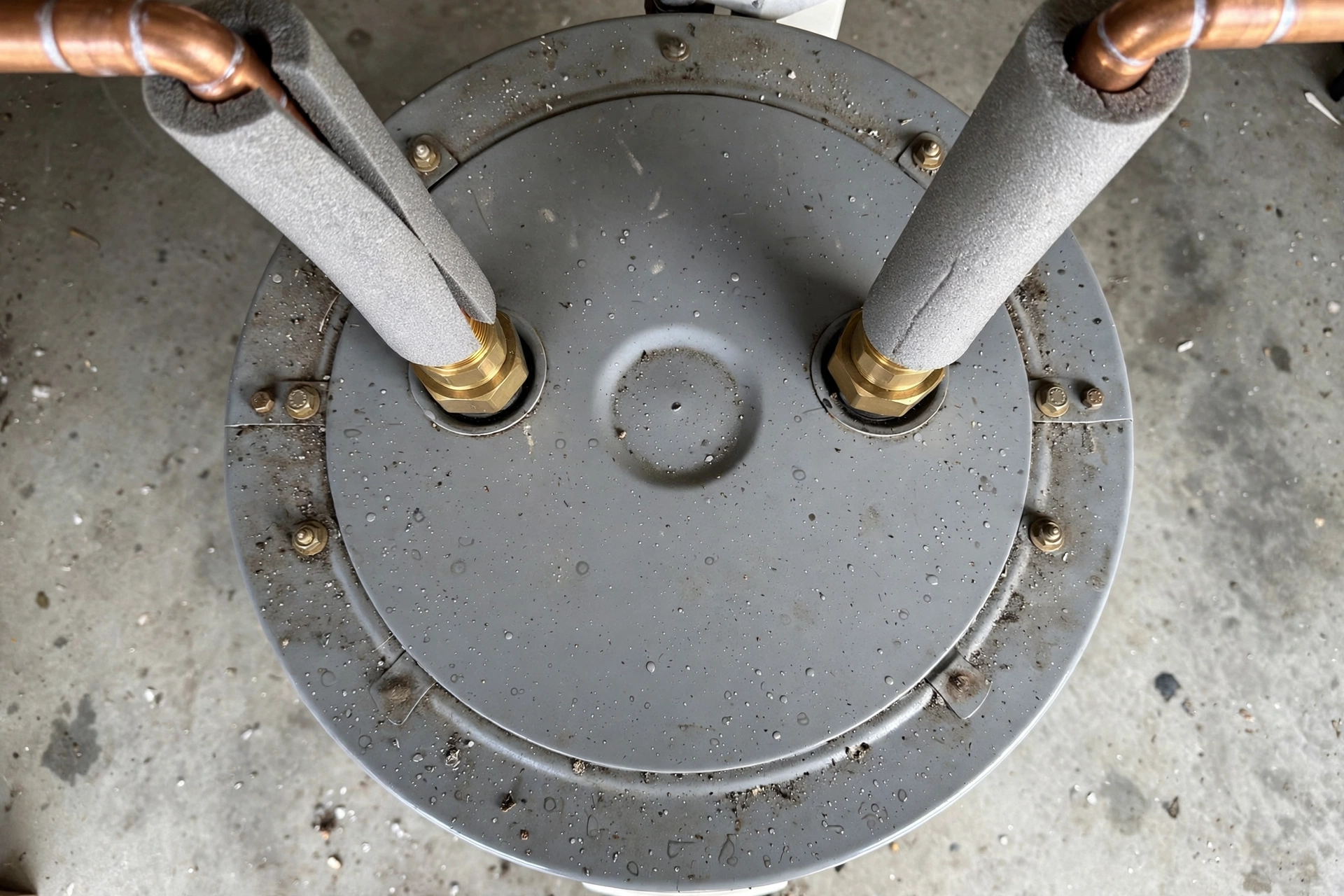
The minutes before the contractor arrives are yours to control, and a few calm actions limit the damage dramatically. First, stop the water. Every water heater has a cold water shutoff valve on the pipe entering the top of the tank. Turn it clockwise until it stops. If that valve is seized from mineral exposure, use your home's main water shutoff instead.
Second, stop the energy. For a gas unit, turn the gas control valve to the pilot or off position, or shut off the gas supply valve to the unit. For an electric unit, switch off the breaker at your electrical panel. A leaking tank with the burner or elements still firing is a tank actively making the problem worse. Third, if the tank is leaking, attach a garden hose to the drain valve and run it to a floor drain or outside, opening the valve to relieve pressure and direct water where it can do the least harm.
Document what you see with your phone: where the water is coming from, how fast, and the unit's age from its label if you can read it. Move valuables away from the water path. Then request service and describe everything. The contractor arrives far more effective when the water is off, the energy is off, and the scene is described accurately.
A leaking water heater is the most common middle-of-the-night call in the Permian Basin, and hard water is usually the backstory. Years of sediment insulate the tank bottom until it overheats and weakens, or the anode rod depletes unnoticed and corrosion eats through the steel wall. By the time water appears, the tank has been failing quietly for a long time.
Where the water comes from tells the contractor what happened. Water from a fitting, valve, or connection is often repairable on the spot. Water seeping from the tank body itself, from a seam or the bottom, means the tank has failed and needs replacement. Water from the relief valve discharge pipe points to pressure or temperature problems that need diagnosis before they escalate.
While you wait, your job is containment, not repair. Keep the water shut off, keep the area clear, and resist the urge to keep using hot water from a leaking tank. Every gallon you draw gets replaced by cold water feeding the leak. The contractor will assess whether the unit can be saved or must be replaced, and in replacement cases, many emergency visits convert directly into same-day installations.
Related: replacing a failed tank, repairable leak fixes
Sudden hot water loss feels like an emergency even when the tank is intact, and sometimes a quick check resolves it before anyone is called. On an electric unit, check your breaker panel first: a tripped breaker is a two-second fix. On a gas unit, check whether the pilot is lit, following the relighting instructions on the unit's label. Also confirm the thermostat is still set to 120 degrees and that nobody adjusted it.
If those basics check out and there is still no hot water, the problem is internal: a failed element or thermostat on electric units, a dead thermocouple or gas valve issue on gas units, or a dip tube that has disintegrated and is mixing cold water into the hot supply. None of these are diagnosable without opening the unit up, which is where the contractor comes in.
When you request service, describe the timeline: sudden or gradual, whole house or one bathroom, anything changed recently. Those details point the contractor toward the cause before arrival, which is how emergency visits get resolved fast.
Related: electric troubleshooting and repair, gas troubleshooting and repair
Every emergency is a message about what the old setup lacked. A tank that leaked from the bottom is a message about flushing and anode rods. A closet install with no drain pan is a message about placement. A relief valve that failed is a message about testing safety devices. The calm after the crisis is the time to hear those messages, while the memory of mopping at midnight is still fresh.
If the emergency ended in replacement, build the new installation around prevention from day one: a full-port drain valve for easy flushing, a drain pan with a real drain line underneath, an expansion tank where the system needs one, and a maintenance rhythm that fits your schedule. The replacement visit is the cheapest moment to add every one of these, because the plumbing is already open and the old unit is already out.
If the unit was repaired, schedule the maintenance it has been missing. Annual flushing in Midland's 15 to 25 grains per gallon water is what keeps a repaired tank from becoming a repeat emergency. Ask the contractor what the tank's condition suggests about its remaining life, so the next replacement is a planned project, not another midnight surprise.
Related: annual maintenance service, planned tank replacement
 24/7 Emergency Service Questions?
Describe what your unit is doing and we will help arrange the next step.
Shut off the cold water supply to the tank, or your home's main valve if the tank valve is seized. Turn off the gas or the breaker to stop heating. Attach a hose to the drain valve and direct water to a safe drain. Then request service and describe where the water is coming from.
Find the cold water shutoff valve on the pipe entering the top of the tank and turn it clockwise until it stops. In Midland's hard water these valves sometimes seize from mineral buildup, so if it will not turn, use your home's main water shutoff instead. Locate your main valve now, before an emergency, so you are not searching while water spreads.
Water damage is the main risk, and it can be extensive if a leak runs for hours. There are also safety concerns: scalding water, electrical hazards on electric units, and gas hazards on gas units. Shut off water and energy to the unit, keep clear of standing water near electrical components, and if you smell gas, leave the house and call the gas utility from outside.
Rumbling or popping alone is not an emergency, it is sediment talking, and the tank is usually safe to use while you arrange a service visit. But do not ignore it. The noise means sediment is insulating the tank bottom and overheating it, which shortens the tank's life with every cycle. Schedule a flush soon rather than waiting for the noise to become a leak.
Active leaking, water spraying from connections, any smell of gas, and total hot water loss when vulnerable people are in the home all qualify. Rumbling, lukewarm water, or a pilot that went out once are urgent but usually fine until a scheduled visit. When you request service, describe the symptoms and the contractor will triage honestly.
Not seeing your question? Request service and describe what your unit is doing.
Call (432) 321-0116Midland Water Heater Pros connects you with independent contractors who repair gas and electric water heaters …
Learn more
A water heater installation is a decision you will live with for years, so sizing and setup matter more than b…
Learn more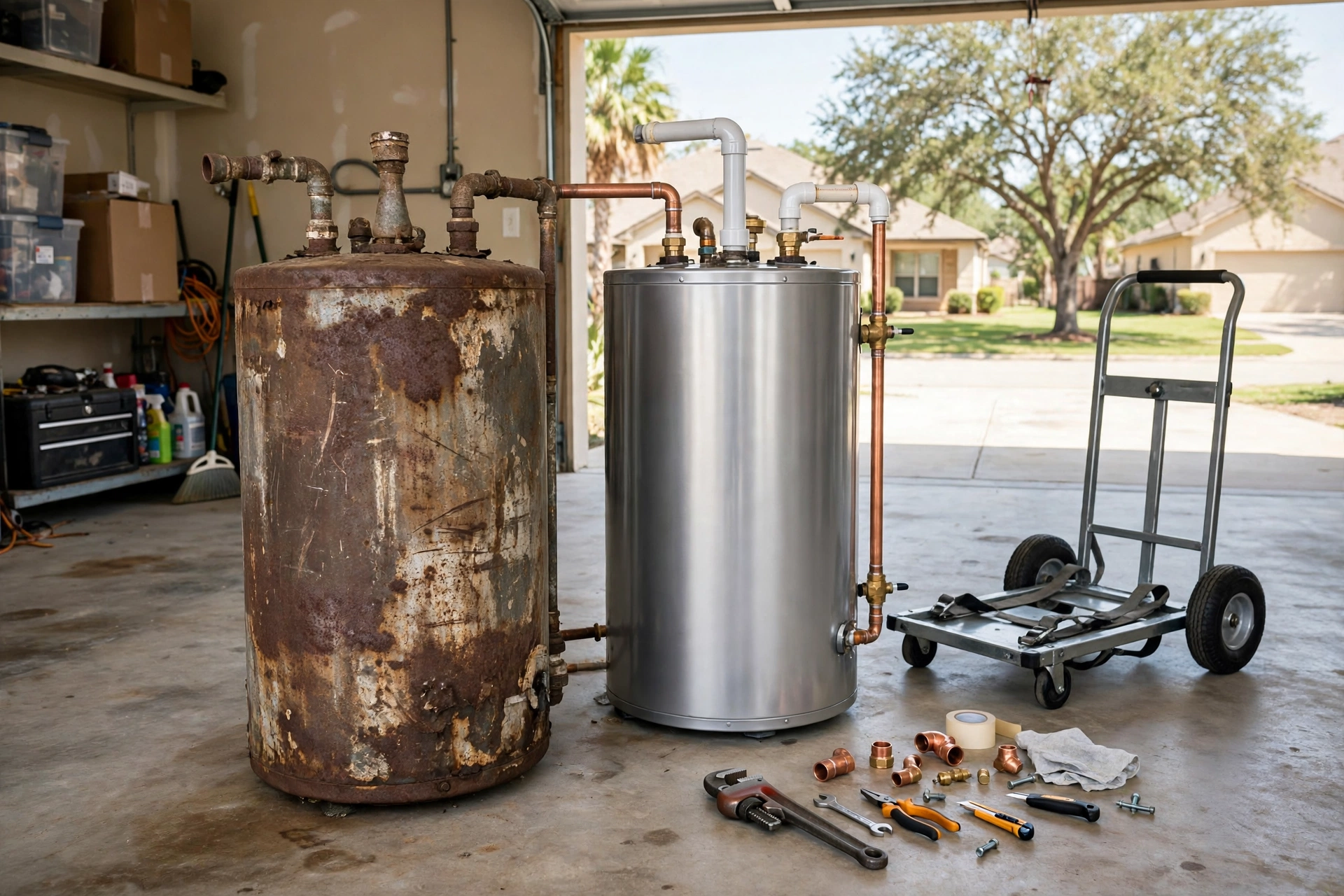
Every water heater reaches a point where another repair just delays the inevitable. Midland Water Heater Pros …
Learn moreHot Water, HandledA burst tank at midnight or a house with no hot water before the school run cannot wait for business hours. Midland Water Heater Pros connects Midland homeowners with independent contractors who handle water heater emergencies across the Permian Basin, including leaking tanks, total hot water loss, and gas concerns. If you smell gas, leave the house and call your gas utility first, then request service once everyone is safe.